Stress Relief · Beginner Guide
Yoga for Stress and Anxiety: A Calming 10-Minute Practice
When your thoughts are racing, a long or complicated routine can feel like another demand. Yoga for stress and anxiety can offer a quieter option: a few familiar shapes, steady breathing, and permission to pause.
Research suggests yoga may provide short-term support for anxiety symptoms, although results vary and the evidence remains limited. It should complement, not replace, appropriate mental-health care.
This beginner practice takes about 10 minutes. Every pose can be done at home, and you do not need to be flexible. You will also learn when to shorten the sequence, when to stop, and when another form of support may be more appropriate.
How Yoga May Support Stress and Anxiety
Stress and anxiety are related, but they are not identical. Stress commonly arises in response to a specific pressure. Anxiety may continue after that pressure passes or appear without an obvious cause.
Yoga combines physical positions, breathing, and attention. During a slow practice, these elements give you one manageable task at a time. Feeling your feet, following an exhale, or noticing where your shoulders sit can interrupt an automatic rush from one thought to another.
Some studies suggest yoga may reduce perceived stress and the intensity of anxiety symptoms over the short term. However, programs differ widely, and yoga has not consistently outperformed established treatments such as cognitive behavioral therapy.
This distinction matters. A practice can help you settle without being a cure. You are not failing if movement does not make you feel calm, and you do not need to force relaxation.
What to expect from a short practice
You may notice less physical tension, a steadier focus, or no dramatic change at all. Each response is valid. Benefits are more likely to come from a repeatable routine than from chasing a particular emotional state.
A short session is useful because it lowers the barrier to beginning. Ten attentive minutes can fit between meetings, after work, or before your evening routine.
Key takeaways
- Yoga may support stress management, but evidence does not justify calling it a cure.
- Movement, breathing, and focused attention work together.
- Your goal is to practise safely, not to manufacture calm.
Before You Begin
Choose a quiet space where you can sit and lie down. A yoga mat is optional. A firm rug may work if it does not slide.
Wear clothing that lets you move comfortably. Keep a chair, folded blanket, or cushion nearby.
Avoid practising while driving, in water, or anywhere you need to remain alert. Stop if you feel pain, dizziness, numbness, breathlessness, or increasing distress. Seek medical guidance if symptoms persist.
If closing your eyes feels uncomfortable, keep them open. Choose a neutral point in front of you instead. Yoga should not require you to ignore your sense of safety.
Key takeaways
- Use a stable, distraction-free surface.
- Keep your eyes open whenever that feels safer.
- Stop when your physical or emotional response tells you to pause.
A 10-Minute Yoga Sequence for Stress and Anxiety
This five-pose sequence moves from seated attention into a resting fold, then adds grounded strength and a standing finish. All five positions are classified as beginner poses in the supplied Yoga24 pose data.
| # | Pose | Sanskrit | Hold | Level | Key benefit |
|---|---|---|---|---|---|
| 1 | Easy Pose | Sukhasana | 1–2 minutes | Beginner | Calms the mind |
| 2 | Child’s Pose | Balasana | 1–2 minutes | Beginner | Rests spine and hips |
| 3 | Bridge Pose | Setu Bandhasana | 1 minute | Beginner | Opens chest |
| 4 | Mountain Pose | Tadasana | 1 minute | Beginner | Grounding and better posture |
| 5 | Standing Forward Fold | Uttanasana | 1 minute | Beginner | Stretches hamstrings |
Allow additional time between positions. Move slowly and prioritise stability over the clock.
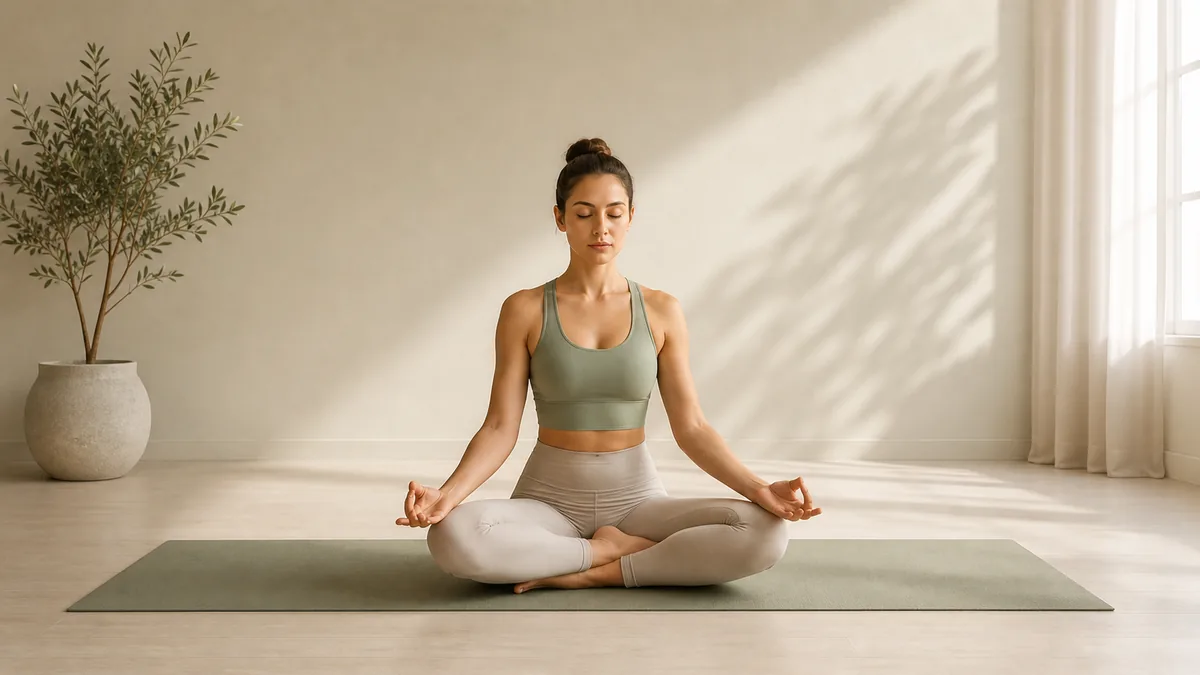
Easy Pose (Sukhasana)
How to do it
- Sit tall on your sit bones.
- Cross your shins and rest your hands on your knees.
Easy Pose is associated with opening the hips and calming the mind in the supplied pose data. The seated position also gives you a stable place to follow your breathing.
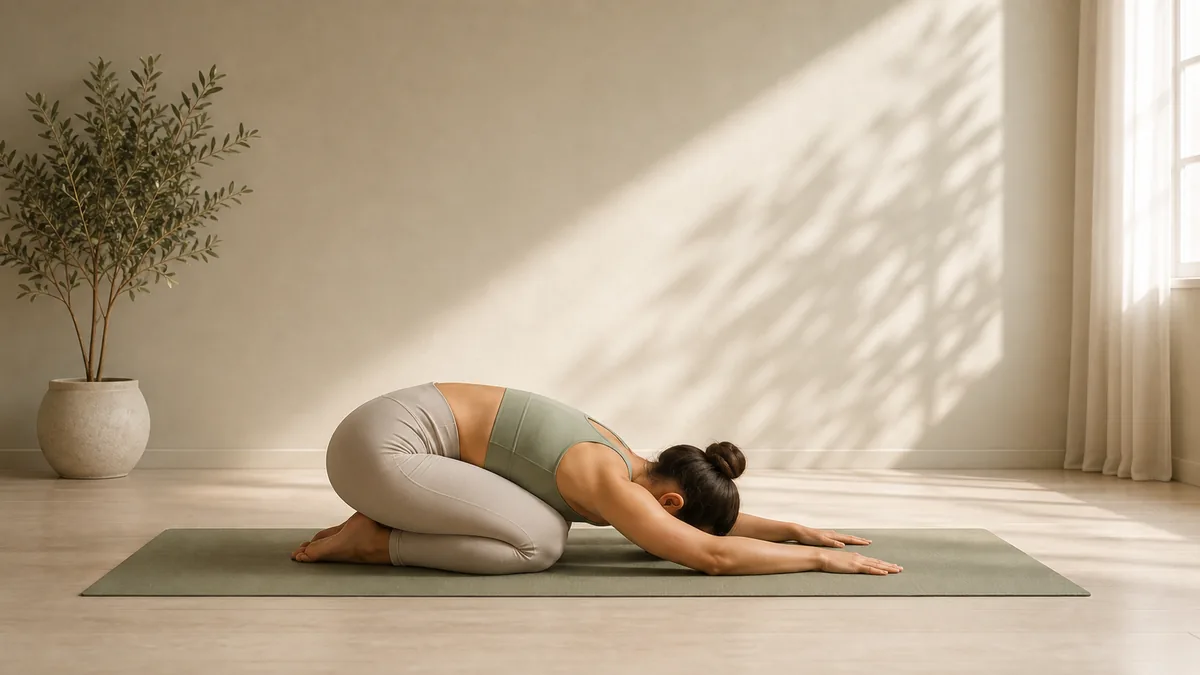
Child’s Pose (Balasana)
How to do it
- Bring your hips toward your heels with your arms extended.
- Lower your forehead toward the mat.
Child’s Pose rests the spine and hips. Its calm-and-relaxation classification makes it a natural resting point within this sequence.
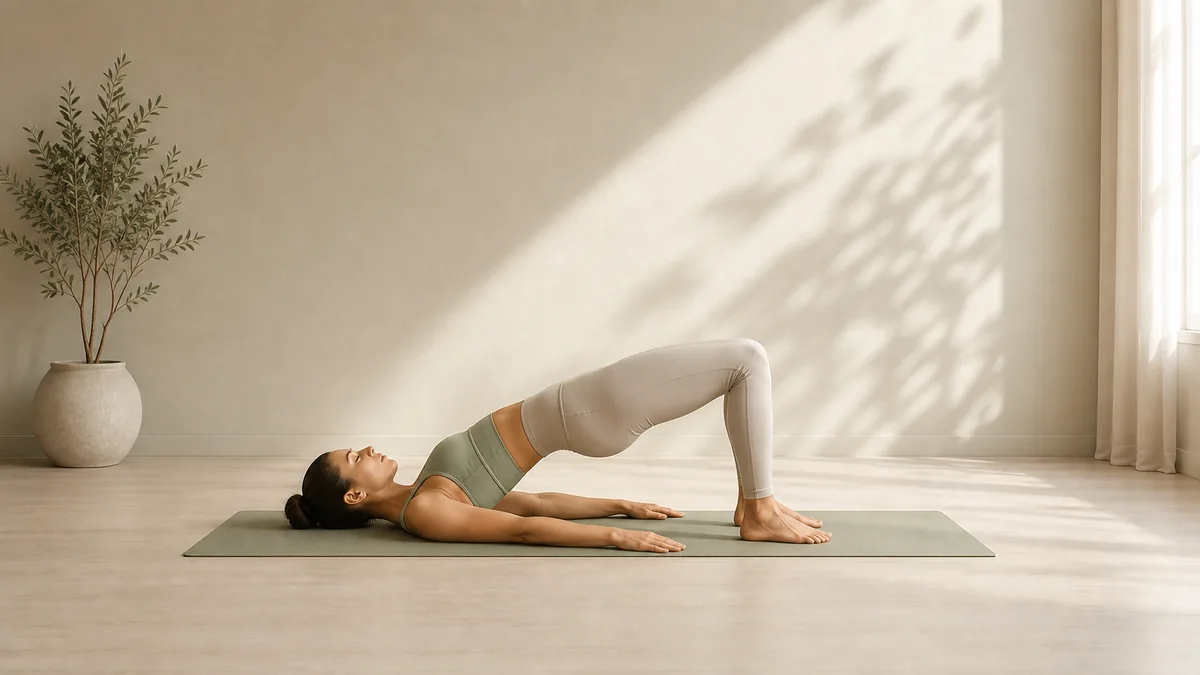
Bridge Pose (Setu Bandhasana)
How to do it
- Lie on your back with your feet hip-width apart and knees over your ankles.
- Ground your arms and lift your hips as you inhale.
Bridge Pose opens the chest and strengthens the glutes. This active shape provides a clear physical focus before you return to standing.
Mountain Pose (Tadasana)
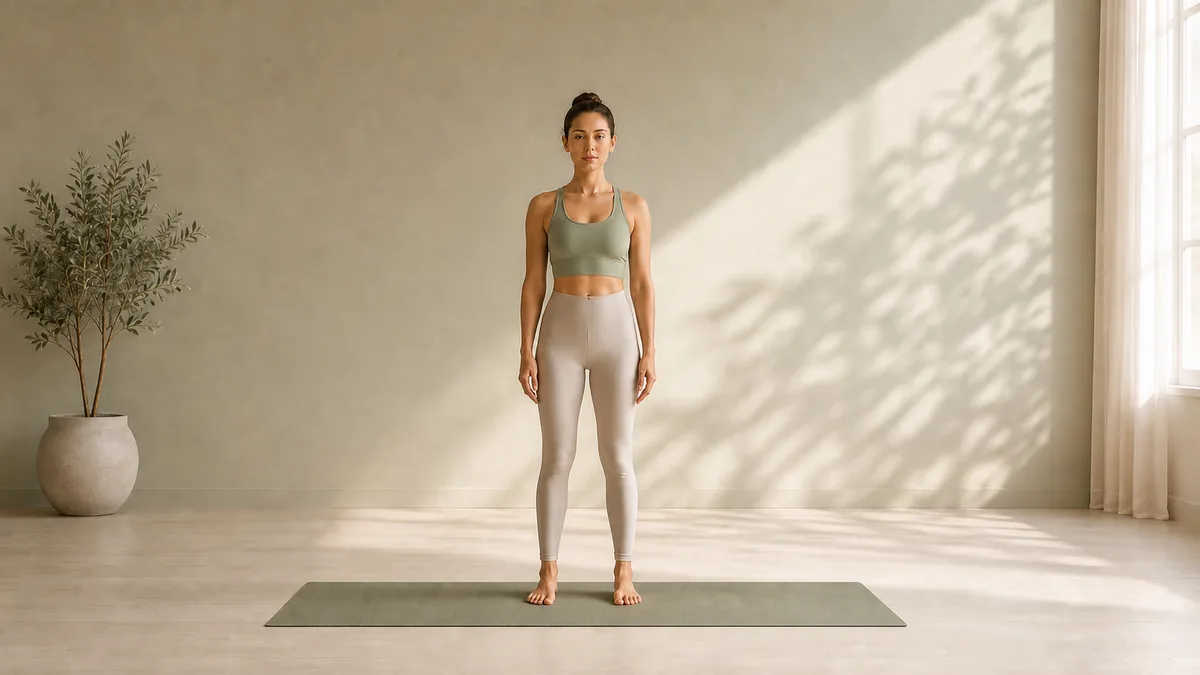
How to do it
- Place your feet hip-width apart and distribute your weight evenly.
- Lift through the crown of your head and relax your shoulders.
Mountain Pose supports grounding and better posture. Even weight through your feet creates a specific point of attention when your mind feels scattered.
Standing Forward Fold (Uttanasana)
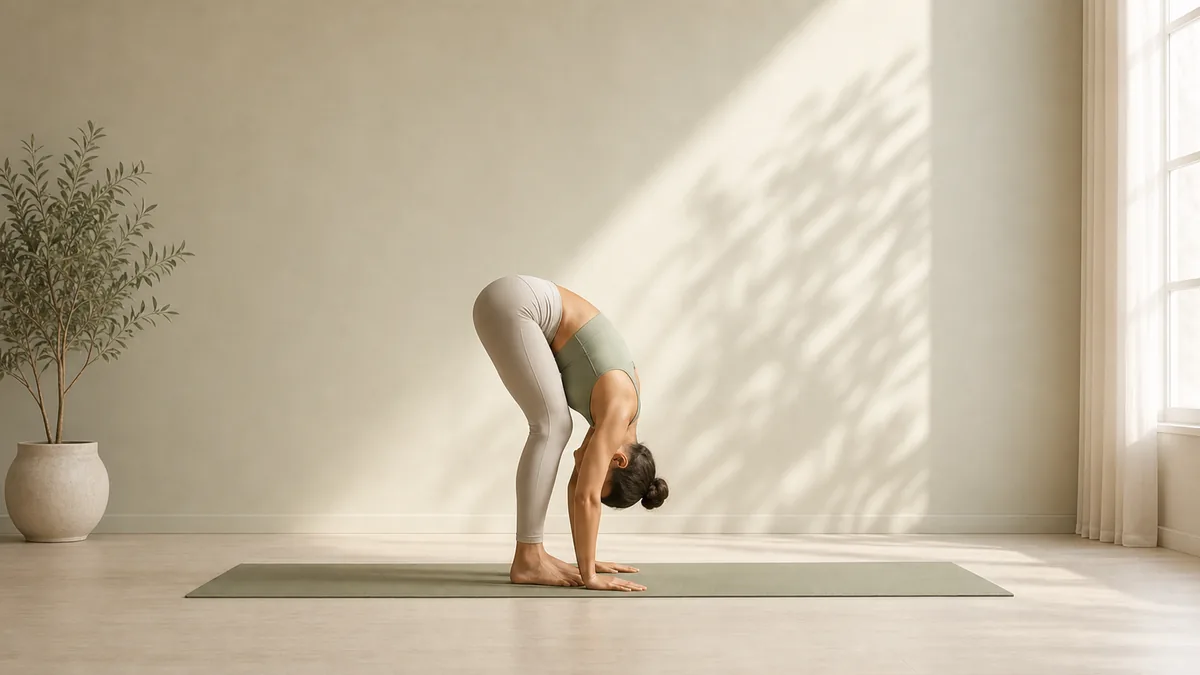
How to do it
- Hinge from your hips and keep your knees soft.
- Let the crown of your head release down.
Standing Forward Fold stretches the hamstrings and is classified for calm and relaxation. Keep your knees soft and treat the stated alignment cue as a boundary, not a flexibility test.
Key takeaways
- The sequence contains five beginner poses from the supplied pose data.
- Follow the recorded hold times, alignment cues, and breath cues.
- Move slowly between poses and stop whenever you need to pause.
Adapt the Practice to the Day You Are Having
A useful routine should still work when your schedule or energy changes. You can practise one position instead of all five. On a busy morning, Mountain Pose offers a standing option without asking you to get onto the floor.
If you feel physically restless, Bridge Pose may give your attention a more active task. If you want a seated starting point, choose Easy Pose. These choices reflect each pose’s supplied categories and benefits rather than a promise about how you will feel afterward.
On a low-energy day, you might practise only Child’s Pose. Do not extend its recorded hold time to compensate for skipping other positions. More time is not automatically more helpful.
Create a repeatable cue
Link your practice to something that already happens. You might begin after closing your laptop or before starting your evening routine. Keep the cue specific enough that you do not need to negotiate with yourself.
Consistency can make a wellness habit easier to maintain, but it does not guarantee relief from anxiety or stress. If the routine becomes another standard you feel pressured to meet, shorten it or take a break.
Key takeaways
- One pose can be a complete practice for the day.
- Match your choice to your available time and physical energy.
- A routine should reduce decision-making, not create another obligation.
When Yoga Is Not Enough
Yoga is not emergency care or a substitute for mental-health treatment. Contact a qualified healthcare professional if anxiety is persistent, worsening, interfering with daily life, or causing you to avoid work, sleep, relationships, or essential activities.
During yoga, stop if focusing inward intensifies panic, traumatic memories, dissociation, or distress. Open your eyes, look around the room, and return to an activity that helps you orient to your surroundings. A trauma-informed mental-health professional can help you decide whether movement-based practices are suitable.
Professional support and yoga are not competing choices. Yoga may sit alongside therapy, medication, social support, sleep care, or other clinician-recommended approaches.
Key takeaways
- Persistent or disruptive anxiety deserves professional assessment.
- Stop any practice that increases distress.
- Yoga can complement appropriate care, but it should not replace it.
Frequently Asked Questions
- How often can you practise this yoga sequence?
- You can choose a frequency that feels manageable, provided the practice remains comfortable and appropriate for your health. The supplied pose data does not prescribe a weekly schedule. Begin conservatively and notice how you respond afterward. If anxiety, pain, dizziness, or another symptom worsens, stop and seek guidance from a qualified healthcare professional.
- Is yoga better in the morning or evening for stress?
- Neither time is universally better. A morning practice may help you begin with a deliberate pause, while an evening session may fit more naturally after work. Choose the time you can repeat without rushing. Yoga may support stress management, but the timing has not been established here as a treatment factor.
- What if focusing on your breath makes you more anxious?
- Stop directing attention toward your breathing if it increases anxiety. Keep your eyes open and focus on an external detail, such as a fixed object or sounds in the room. You can also end the practice. Breath awareness is optional, and a mental-health professional can offer individual guidance if internal focus repeatedly causes distress.
- Do you need to complete every pose?
- No, you do not need to complete every pose. Choose one position or stop before the sequence ends whenever that feels more appropriate. The practice is not a test of endurance or discipline. Follow the supplied hold time for any pose you select.
- Can yoga replace therapy or anxiety medication?
- No, yoga should not replace therapy or prescribed medication. Evidence suggests it may offer supportive benefits for some people, but established mental-health treatments have a different role. Do not change medication without speaking to your prescriber. If anxiety affects daily functioning, ask a qualified professional about treatment options suited to your circumstances.
Key takeaways
- Practise at a manageable time and frequency.
- Breath awareness is optional if it increases distress.
- Yoga belongs alongside appropriate care, not in place of it.
Article Summary
Yoga for stress and anxiety can provide a short, structured pause through beginner positions, breathing, and focused attention.
- The sequence uses five beginner poses from the Yoga24 pose dataset.
- You may shorten the routine to one position on demanding days.
- Persistent, worsening, or disruptive anxiety requires professional support.
A Calmer Practice Starts Small
You do not need a perfect routine or a perfectly quiet mind. A useful practice begins with the amount of movement and attention you can safely offer today.
Yoga for stress and anxiety works best as supportive self-care rather than a promise of immediate relief. Keep the routine brief, respect your response, and reach for professional care when your needs extend beyond what a yoga practice can provide.
Practise this routine with Yoga24
Ready to turn these five poses into a guided practice? Yoga24 creates routines for your level and available time, then guides you through each pose with spoken cues so you can focus on moving and breathing instead of watching a screen.
Choose a calm ten-minute session in Yoga24 and let the app guide your next intentional pause.
Practise with Yoga24