At-Home Yoga · Beginner Guide
How to Start Yoga at Home for Beginners
Starting yoga at home can feel strangely complicated. One search produces dozens of styles, hundreds of videos, and a shopping list long enough to furnish a small studio.
You need far less than that. To learn how to start yoga at home for beginners, focus on four things: a safe space, comfortable clothing, qualified guidance, and a short session you can repeat. You do not need to be flexible, buy premium equipment, or practise every day.
This guide gives you a practical first-session structure and a seven-day starting plan. It also explains how to choose an appropriate class, recognise useful instructions, and know when home practice is not the best option.
What You Need to Start Yoga at Home
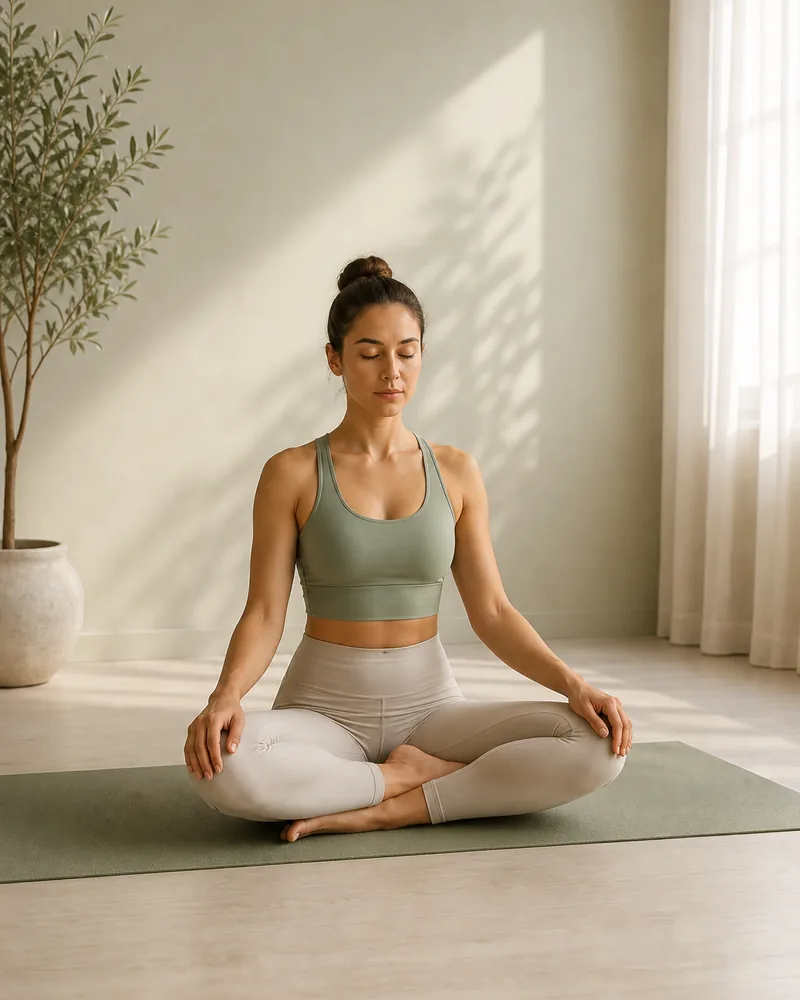
You can begin without creating a permanent yoga room. Find a clear area where you can lie down and extend your arms without hitting furniture, lamps, pets, or other people.
Check the floor before every session. Rugs should not bunch or slide, and nearby objects should not have sharp edges. Leave enough space around your head as well as your hands and feet.
Essential and optional equipment
A yoga mat provides grip and some cushioning, but you do not need an expensive one. If you are testing yoga before buying equipment, choose a stable, nonslip surface that feels comfortable.
| Item | Do you need it? | Practical alternative |
|---|---|---|
| Yoga mat | Helpful, not mandatory | Stable nonslip surface |
| Comfortable clothing | Yes | Any clothes that allow movement |
| Yoga blocks | Optional | No unverified substitution for weight-bearing use |
| Strap | Optional | Use only when directed by a qualified teacher |
| Blanket | Optional | Firm folded household blanket |
| Bolster | Optional | Firm cushion when appropriate |
| Mirror | Optional | Never rely on it as your only safety check |
Household objects are not automatically safe yoga props. A thick book can slide, and a dining chair can tip. Use equipment only as instructed, particularly when it supports your weight.
Keep water nearby if you want it, and silence notifications before starting. Candles and incense are optional, but open flames can become a hazard while your attention is elsewhere.
Key takeaways
- You need enough clear space to move safely.
- A mat is helpful, but premium equipment is unnecessary.
- Household objects should not become weight-bearing props without reliable guidance.
How to Choose Beginner Yoga Guidance
When you are new, following a qualified teacher is safer than inventing your own sequence. Home practice removes real-time feedback, so the quality and pace of your instruction matter.
Look for classes labelled “absolute beginner,” “foundations,” or “beginner level.” A short foundational class is usually a better starting point than an “all levels” flow, which may assume prior knowledge.
The teacher should explain how to enter and leave positions, where you may feel effort, and when to stop. Useful instruction includes pauses and options rather than treating one shape as correct for every body.
Check the teacher and class description
Credentials vary between regions and organisations. Look for clear information about the teacher’s training, experience, and intended audience. Credentials do not guarantee that a teacher suits you, but complete information helps you make an informed choice.
Before pressing play, check:
- The class length and stated level
- Whether equipment is required
- Whether the pace is slow or vigorous
- Whether inversions or advanced positions are included
- Whether modifications are demonstrated
- Whether the entire class remains visible and easy to hear
Preview unfamiliar videos by moving through the timeline. This takes two minutes and prevents an unexpected advanced section halfway through your session.
Key takeaways
- Use qualified, clearly identified instruction when you begin.
- Choose true beginner or foundations content rather than “all levels.”
- Preview the class for equipment, pace, and advanced positions.
Your First At-Home Yoga Session
Your first session does not need to prove anything. Its purpose is to help you learn how instructions sound, how your space works, and how your body responds.
Plan for 10 to 20 minutes. That is long enough to experience a complete class structure without making fatigue the central challenge.
Follow this five-step structure
- Prepare your space. Clear the floor, place any equipment within reach, and remove distractions.
- Check how you feel. Notice your energy and any existing discomfort before movement begins. This gives you a baseline for deciding whether to continue.
- Start the beginner class. Follow the teacher’s instructions without trying to match the deepest version shown on screen.
- Pause when needed. Stop the video if instructions move too quickly or you need time to reposition.
- Finish and reassess. Notice whether any movement caused pain, dizziness, numbness, or unusual breathlessness. Seek appropriate guidance if concerning symptoms continue.
Do not use speed, range of motion, or flexibility to judge your first practice. A smaller comfortable movement is more useful than forcing yourself toward the teacher’s shape.
You may feel mild muscular effort during physical activity. Sharp, electrical, pinching, or escalating pain is a reason to stop rather than stretch farther.
What if you cannot follow the teacher?
Pause the class. Replay the instruction once, and skip the movement if it remains unclear. You lose nothing by watching before attempting it.
A video cannot see your alignment or physical response. If you repeatedly feel uncertain, take a live beginner class or arrange individual instruction before continuing alone.
Key takeaways
- Keep your first session between 10 and 20 minutes.
- Pause or skip instructions you cannot follow confidently.
- Stop when a movement causes pain or concerning symptoms.
A Seven-Day Plan for Starting Yoga at Home
The easiest first week is intentionally modest. Your goal is to test your setup, teacher, timing, and response—not to create a flawless daily routine.
| Day | Plan | Approximate time |
|---|---|---|
| 1 | Prepare your space and preview one beginner class | 10 minutes |
| 2 | Complete the first portion of that class | 10–15 minutes |
| 3 | Rest and note what felt clear or confusing | 5 minutes |
| 4 | Repeat the same beginner class | 10–20 minutes |
| 5 | Rest or watch one technique explanation | 5–10 minutes |
| 6 | Repeat the class, pausing whenever needed | 10–20 minutes |
| 7 | Review the week and choose next week’s schedule | 10 minutes |
Three movement sessions are enough to learn from your first week. Daily practice is not required, and rest days give you useful information about how your body responds.
Use the same class more than once. Familiarity allows you to listen more carefully instead of constantly decoding new names and transitions.
Review before week two
Ask yourself:
- Was the practice space large and stable enough?
- Could you hear and see the teacher clearly?
- Did the pace allow time to reposition?
- Were modifications explained?
- Did the session fit your actual schedule?
- Did any instruction feel confusing or unsafe?
- Would live guidance make you more confident?
Change one variable at a time. If the session was too long, shorten it before replacing the teacher, equipment, location, and style all at once.
Key takeaways
- Begin with three short movement sessions rather than a daily target.
- Repeat one class so the instructions become familiar.
- Adjust one part of your routine at a time.
How to Make Home Yoga a Realistic Habit
Consistency becomes easier when the routine has a clear cue. Connect yoga to an event that already happens, such as closing your laptop or finishing your morning drink.
Avoid vague plans like “practise when there is time.” Decide where, when, and how long you will practise. A useful plan might be: “On Tuesday and Saturday, I will follow my 15-minute beginner class before breakfast.”
Keep the minimum version small. On a difficult day, your planned practice might be preparing the space and completing five minutes of a familiar class. A short session still maintains the cue.
Remove common points of friction
Store your mat where you can reach it without reorganising a cupboard. Save your chosen class before the scheduled time. Place required equipment together so setup does not become a separate project.
Track attendance rather than performance. A calendar mark can record that you arrived, without judging flexibility, strength, or appearance.
Do not make up for a missed session by doubling the next one. Return to your regular plan. A schedule should support practice, not turn it into a debt.
Key takeaways
- Link practice to a specific event in your existing routine.
- Prepare the class and equipment before the scheduled time.
- Measure whether you showed up, not how your body looked.
When to Seek In-Person or Medical Guidance
Home yoga is convenient, but it is not the right setting for every situation. You may benefit from live instruction when you cannot understand alignment cues, feel unstable, or want to attempt unfamiliar advanced positions.
Avoid learning advanced inversions or deep backbends alone. A recorded video cannot intervene if your setup or technique becomes unsafe.
Consult a healthcare professional before beginning if you have an existing health condition, active injury, recent surgery, or pregnancy. A qualified yoga therapist may help adapt practice after your medical provider confirms that yoga is appropriate.
Stop the session and seek medical advice for persistent or severe pain, fainting, chest discomfort, neurological symptoms, or unusual breathing difficulty. Emergency symptoms require local emergency care rather than online yoga advice.
Key takeaways
- Use live guidance when instructions or alignment remain unclear.
- Do not learn advanced inversions or deep backbends alone.
- Medical concerns require individual advice from an appropriate professional.
Frequently Asked Questions
Can you start yoga at home with no experience?
Yes, you can start at home with no experience if you use clear beginner instruction and a safe practice area. Choose a short foundations class led by an identifiable, qualified teacher. Preview it before moving, pause whenever necessary, and avoid advanced positions. A live beginner class is a better choice if instructions remain confusing or you need individual modifications.
How many days a week should a beginner do yoga?
Two or three short sessions per week can be a manageable starting schedule, but no single frequency suits everyone. Allow time to notice how your body responds, especially when yoga is a new form of activity. Your health, other exercise, and recovery needs may affect the right schedule. Seek individual advice when a medical condition or injury is involved.
Do you need to be flexible before starting yoga?
No, flexibility is not a requirement for starting yoga. Your available range of motion is information, not a score. Follow beginner-level instruction and avoid forcing your body to resemble the teacher’s position. Comfortable, controlled movement matters more than reaching the floor or creating a particular shape.
Is it better to learn yoga online or in a studio?
Neither format is universally better. Online classes offer privacy, convenience, and control over timing, while live classes provide immediate feedback and opportunities to ask questions. You might begin with a live foundations class, then repeat familiar material at home. Choose the format that gives you understandable instruction and enough confidence to practise safely.
What should you do if a yoga video moves too quickly?
Pause the video as soon as you lose track of the instruction. Watch the movement before attempting it, replay the explanation once, or skip that section. Do not rush to catch up. If the pace remains unsuitable, choose a slower absolute-beginner class rather than treating confusion as something you must push through.
Can you practise yoga without a yoga mat?
Yes, you can practise some yoga activities without a mat when the surface is stable, nonslip, and comfortable. However, different movements place different demands on the floor and your body. Avoid unstable rugs, slippery flooring, and improvised supports. Follow the equipment guidance supplied by your qualified teacher for the specific class.
Key takeaways
- Clear beginner instruction matters more than prior experience.
- Flexibility is not an entry requirement.
- Pause, change classes, or seek live help when online guidance is unclear.
Article Summary
You can learn how to start yoga at home for beginners by keeping your setup small, following qualified instruction, and repeating short sessions.
- Clear enough floor space and comfortable clothing are the essentials.
- A 10-to-20-minute foundations class is appropriate for your first session.
- Three sessions provide a realistic first-week experiment.
- Repeating one class reduces confusion and decision fatigue.
- Pain, concerning symptoms, and advanced positions require extra caution.
Start With One Short Session
You do not need the perfect mat, a dedicated room, or a daily schedule. You need a safe space and one beginner class that gives you enough time to listen and respond.
The most practical answer to how to start yoga at home for beginners is to begin smaller than your ambition. Learn the routine first. Length and variety can come later.
Save one 10-to-20-minute foundations class now and schedule your first session for a specific day this week.
Start small with Yoga24
Tell Yoga24 your level and how much time you have, and the app will guide you through a complete practice with spoken cues—so you can focus on moving and breathing instead of watching the screen.
Download Yoga24 on the App Store