Beginner Guide
How to Build a Beginner Yoga Routine (Step by Step)
A beginner yoga routine needs just three things: a handful of foundational poses, an order that moves your body safely from standing to the floor, and roughly 10-15 minutes. Below is a complete seven-pose sequence you can follow today, plus the reasoning behind each choice so you can eventually build your own.
You don't need a studio, special clothing, or prior flexibility. You need a few feet of floor space and a willingness to move slowly.
Why most beginners quit before they start
The usual failure point isn't the poses — it's the planning. New practitioners open a random video, get lost in unfamiliar Sanskrit terms, or attempt a sequence built for intermediate bodies. The result is frustration instead of the calm and mobility yoga is supposed to deliver.
A good beginner routine solves this by staying short, sticking to poses that don't require flexibility you don't have yet, and following a predictable shape: center yourself, warm up standing, fold, strengthen, rest.
That's exactly the structure below.
The 7-pose beginner sequence
Hold each pose for 5-8 slow breaths (roughly 30-45 seconds) unless noted otherwise. Move at your own pace — there's no clock to beat.
1. Easy Pose (Sukhasana) — center yourself
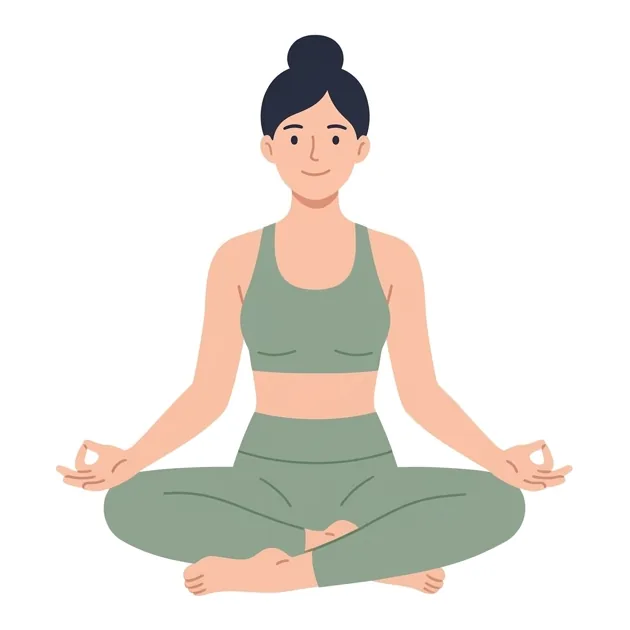
Sit cross-legged with a tall spine and rest your hands on your knees. Close your eyes and take five slow breaths before moving. This isn't a throwaway step — it's what separates "doing yoga" from "doing stretches." Easy Pose gently opens the hips and calms the mind, so you arrive in your body before you start moving it.
Modification: if your hips feel tight, sit on a folded blanket or cushion to elevate them slightly.
2. Mountain Pose (Tadasana) — find your alignment
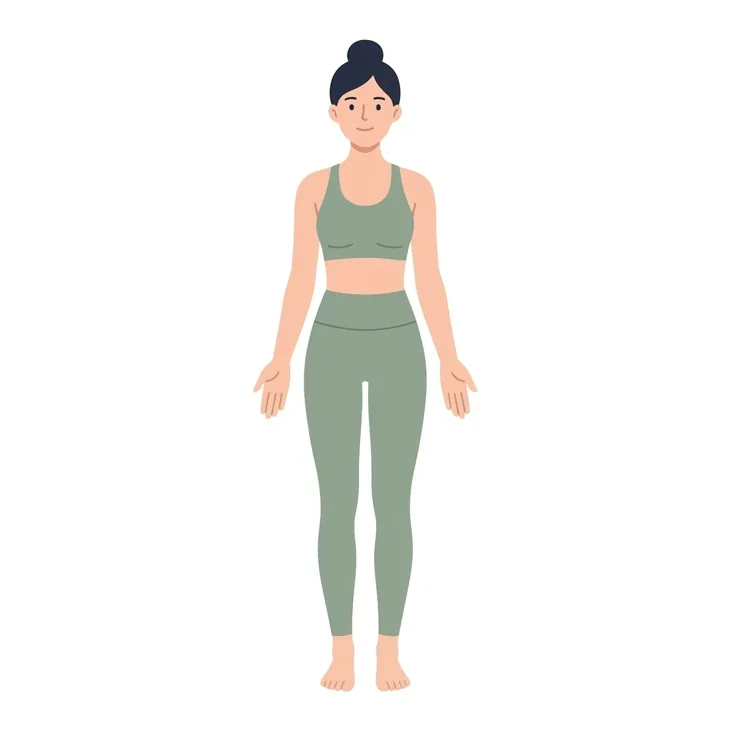
Stand with your feet hip-width apart, ground evenly through all four corners of your feet, and let your arms hang naturally by your sides. Despite looking like "just standing," Mountain Pose teaches the alignment — stacked joints, engaged legs, relaxed shoulders — that every other standing pose builds on.
Why it matters for beginners: nearly every standing pose you'll ever learn starts from this shape. Get comfortable here first.
3. Standing Forward Fold (Uttanasana) — release the spine
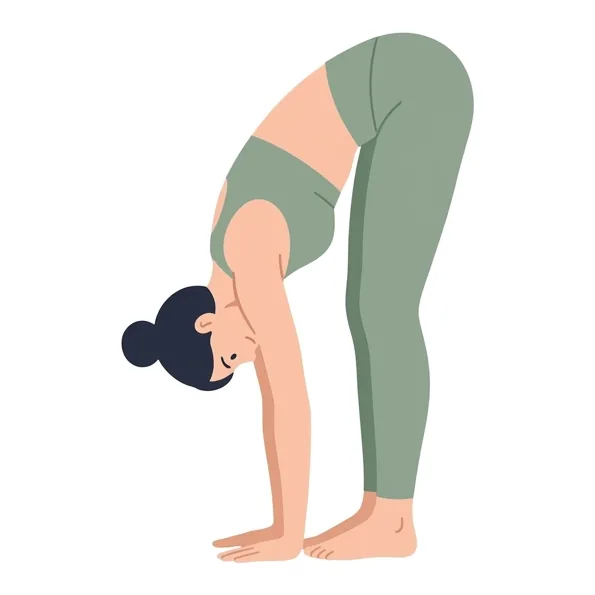
From Mountain Pose, exhale and hinge forward from your hips, letting your head hang heavy. Keep a generous bend in your knees — this isn't a hamstring competition. Rest your hands on the floor, on your shins, or hold opposite elbows.
Modification: back injury or very tight hamstrings? Bend your knees significantly, almost into a standing squat, and focus on lengthening your spine rather than reaching the floor.
4. Downward-Facing Dog (Adho Mukha Svanasana) — build strength
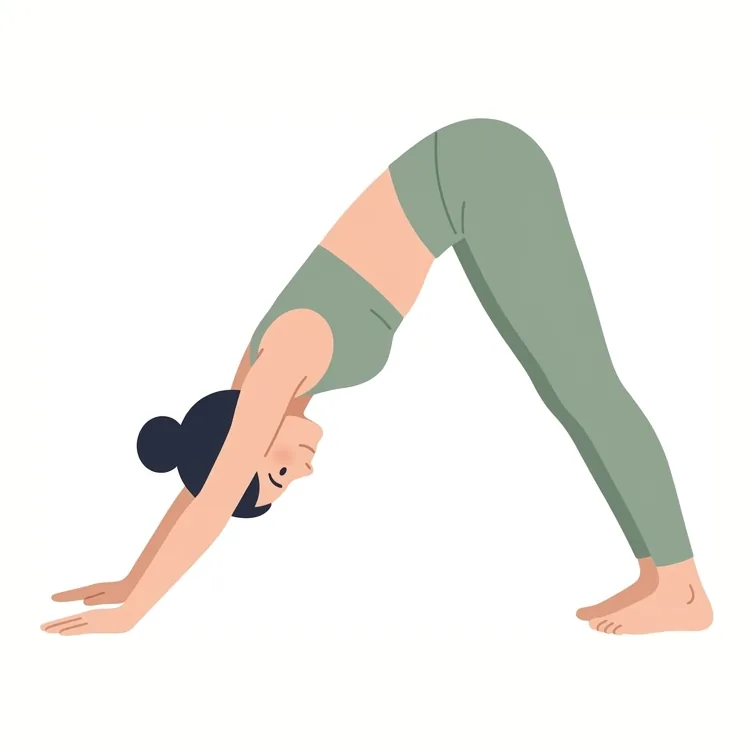
Come onto your hands and knees, tuck your toes, and lift your hips up and back into an inverted V-shape. Keep a soft bend in your knees if your hamstrings are tight — a long spine matters more than straight legs.
This is the pose beginners find most challenging, and that's fine. It builds shoulder and core strength you don't get from folding or standing alone. If your wrists complain, lower onto your forearms instead (a modification sometimes called Dolphin Pose).
5. Cobra Pose (Bhujangasana) — open the chest
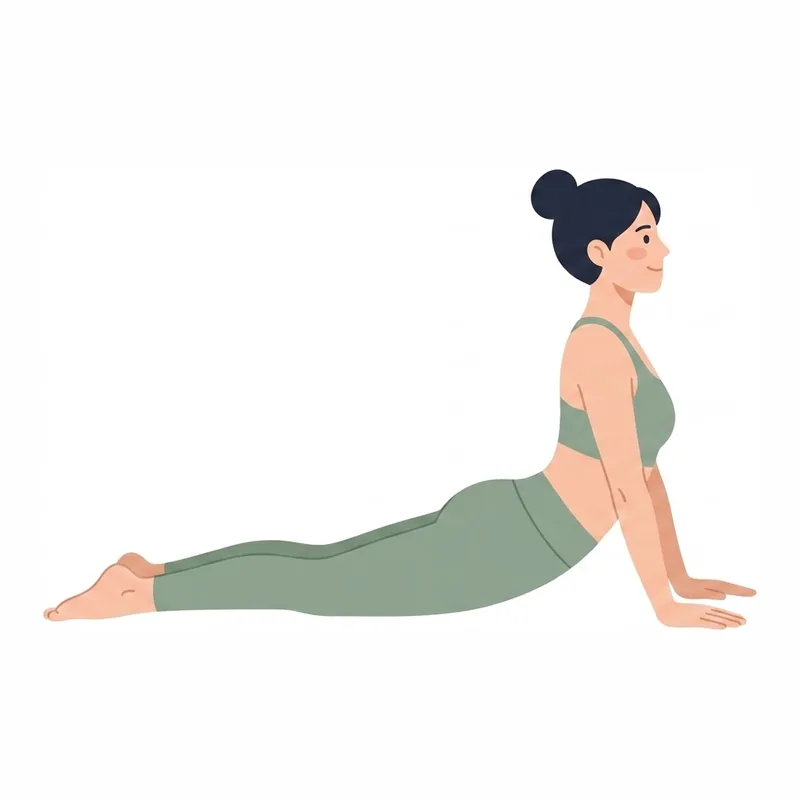
Lower onto your stomach, place your hands under your shoulders, and use your back muscles — not your arms — to lift your chest slightly off the mat. Keep the lift low if you have any lower-back sensitivity; this should feel like a gentle backbend, not a push-up.
Cobra balances out all the forward folding earlier in the sequence and counteracts the rounded posture most of us carry from sitting at desks.
6. Child's Pose (Balasana) — rest and reset
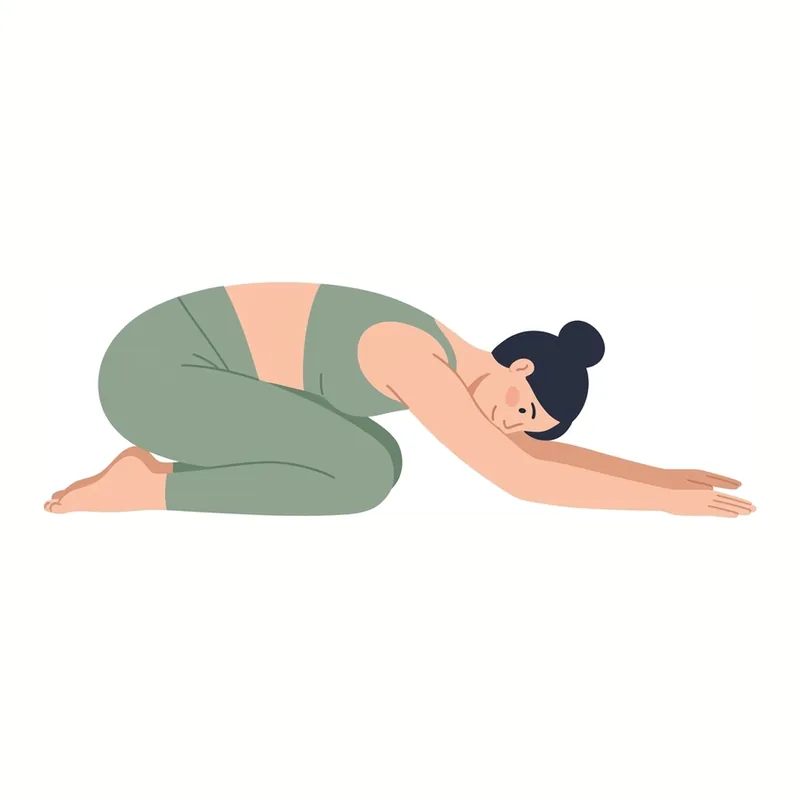
Kneel with your big toes touching, knees wide, and fold your torso down between your thighs with your forehead resting on the mat. Stay here for at least five full breaths.
Child's Pose is the pose you can return to anytime a sequence feels like too much — in yoga, resting mid-practice isn't quitting, it's part of the method.
7. Corpse Pose (Savasana) — integrate the practice
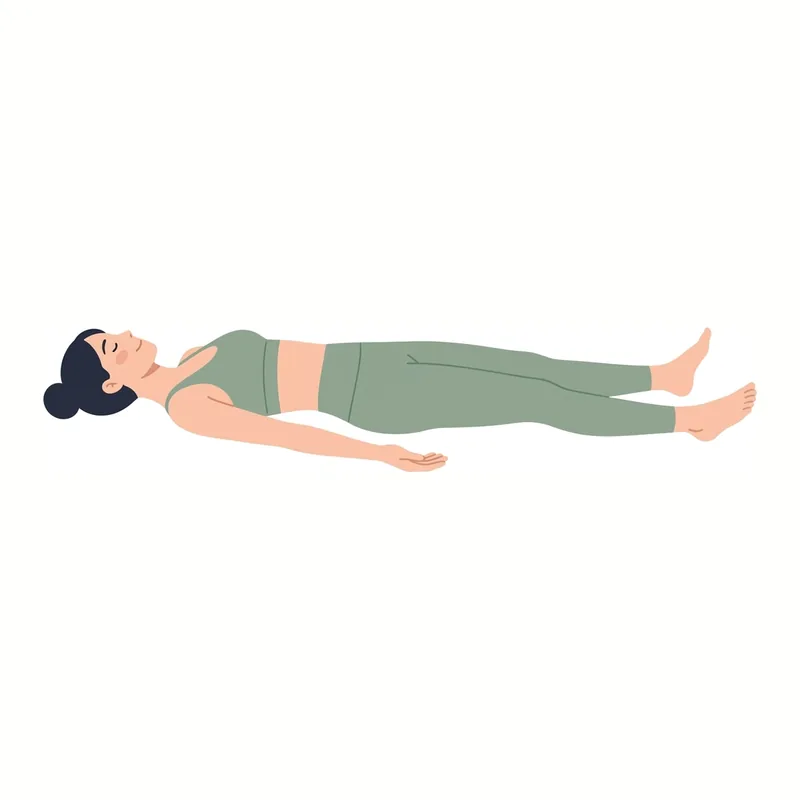
Lie on your back, legs extended and slightly apart, arms relaxed by your sides with palms up. Close your eyes and let your entire body go heavy for at least one full minute — longer if you have time.
It's tempting to skip this step, especially when short on time. Don't. Savasana is where your nervous system actually absorbs the calming effects of the poses that came before it.
How long should this take?
The full sequence above takes about 10 minutes at a beginner pace, which lines up well with how most new practitioners actually stick with a habit: short, repeatable sessions beat occasional hour-long classes. If you have more time, simply hold each pose for longer or repeat Downward Dog and Standing Forward Fold once more before moving to Cobra.
For frequency, most beginners do well starting with 2-3 sessions a week and building from there once the poses feel familiar in the body, rather than jumping straight to daily practice.
Building your own routine going forward
Once these seven poses feel comfortable, you can start customizing: swap in a standing balance pose like Tree Pose, add a gentle twist, or extend your floor sequence with restorative poses like Legs-Up-the-Wall. The underlying structure — center, stand, fold, strengthen, rest — stays the same no matter how you fill it in.
Skip the guesswork next time
This is also the exact problem Yoga24 is built to solve. Instead of memorizing sequences or guessing what to do next, you tell the app your level and how much time you have, and it hands back a complete, hand-sequenced routine — then walks you through it pose by pose with spoken cues, so you can keep your eyes closed instead of checking a screen.
Yoga24 is available now on the App Store, free to download and with no account required.
Download on the App StoreFrequently asked questions
- How long should a beginner hold a yoga pose?
- Most active poses (like Downward Dog or Mountain Pose) are held for 3-5 breaths, roughly 30-60 seconds. Restorative poses like Child's Pose or Corpse Pose can be held longer — a few minutes if you have the time.
- Do I need any equipment to start?
- No. A yoga mat helps with grip and comfort, but a carpeted floor or towel works for your first few sessions. None of the poses above require blocks, straps, or a wall.
- What's the best time of day for a beginner routine?
- Whatever time you'll actually repeat. Mornings work well because the sequence wakes up the body before the day gets busy, but a short evening practice is just as effective for building consistency.
- Can I do this every day?
- Yes — this sequence is gentle enough for daily practice. If you're brand new to movement in general, however, starting with 2-3 sessions a week and adding more once it feels familiar tends to stick better than committing to daily practice immediately.
A note on safety
Yoga is generally low-risk for healthy adults, but if you're pregnant, recovering from injury, or managing a chronic condition, check with a healthcare provider before starting a new routine. The NIH's National Center for Complementary and Integrative Health has a helpful overview of what current research does and doesn't support about yoga's health effects.