Morning Yoga · Beginner Guide
Morning Yoga for Beginners: An Adjustable 5-, 10-, or 15-Minute Routine
A good morning yoga routine for beginners can take 5 to 15 minutes and use a small set of clearly cued poses. You need enough room to move and permission to choose the version that suits your morning.
This practice uses beginner poses from seated, kneeling, inverted, forward-folding, standing, and balancing categories. You can follow a five-minute route when time is tight, complete the standard routine in about 10 minutes, or repeat selected holds for a longer practice. Each pose includes the hold and cues available in Yoga24's pose data.
If a position does not feel right today, leave it out. A shorter practice completed with attention is more useful than rushing through every shape.
10-Minute Morning Yoga Routine at a Glance
All eight poses are classified as beginner in Yoga24's pose data. The listed holds total nine minutes; take the remaining time to move calmly between poses.
| # | Pose | Sanskrit | Hold | Level | Key benefit |
|---|---|---|---|---|---|
| 1 | Easy Pose | Sukhasana | 90 seconds | Beginner | Calms the mind; opens hips |
| 2 | Child's Pose | Balasana | 90 seconds | Beginner | Rests spine and hips; calming |
| 3 | Puppy Pose | Uttana Shishosana | 60 seconds | Beginner | Stretches shoulders and spine |
| 4 | Downward Dog | Adho Mukha Svanasana | 60 seconds | Beginner | Lengthens spine; strengthens arms |
| 5 | Standing Forward Fold | Uttanasana | 60 seconds | Beginner | Stretches hamstrings; calms the mind |
| 6 | Mountain Pose | Tadasana | 60 seconds | Beginner | Grounding and better posture; calms the mind |
| 7 | Tree Pose (right) | Vrksasana | 60 seconds | Beginner | Improves balance and focus |
| 8 | Tree Pose (left) | Vrksasana | 60 seconds | Beginner | Improves balance and focus |
Choose your duration
| Route | What to practise | Pose-hold time | Best fit |
|---|---|---|---|
| 5 minutes | Easy Pose, Child's Pose, Puppy Pose, and Mountain Pose | 5 minutes | A time-limited morning |
| About 10 minutes | All eight poses once in order | 9 minutes | The standard routine |
| About 15 minutes | All eight poses, then Easy Pose, Child's Pose, and both sides of Tree Pose again | 14 minutes | A longer repeat practice |
Do not shorten the stated holds to squeeze more poses into five minutes. Select fewer poses and give yourself time to move between them.
Key takeaways
- The full sequence uses eight poses classified as beginner.
- You can choose fewer poses without rushing their holds.
- The approximately 10-minute route combines nine minutes of holds with calm transitions.
How to Prepare for Morning Yoga at Home
Choose a stable, clear surface. A yoga mat may add grip, but the supplied pose data does not require specific equipment. If this is your first home practice, review the beginner yoga basics before starting. Keep your movements controlled, and do not treat discomfort as a target.
The sequence includes Downward Dog, which Yoga24's data categorises as an inversion. Follow the safety note below before including it.
Stop if you experience sharp or increasing pain, dizziness, numbness, or unusual shortness of breath. Seek individual medical guidance when symptoms persist or when you are returning after an injury.
A chair yoga guide may provide a more suitable starting point when floor practice is inaccessible.
Key takeaways
- Practise on a stable surface with enough room to move.
- Downward Dog requires extra caution because it is categorised as an inversion.
- Stop when you notice pain, dizziness, numbness, or unusual breathlessness.
Beginner Morning Yoga Routine: Step by Step
A beginner morning yoga routine works best when its order and timing are clear. Based on Yoga24's library of 70 poses, this sequence uses eight poses classified as beginner.
Easy Pose (Sukhasana)
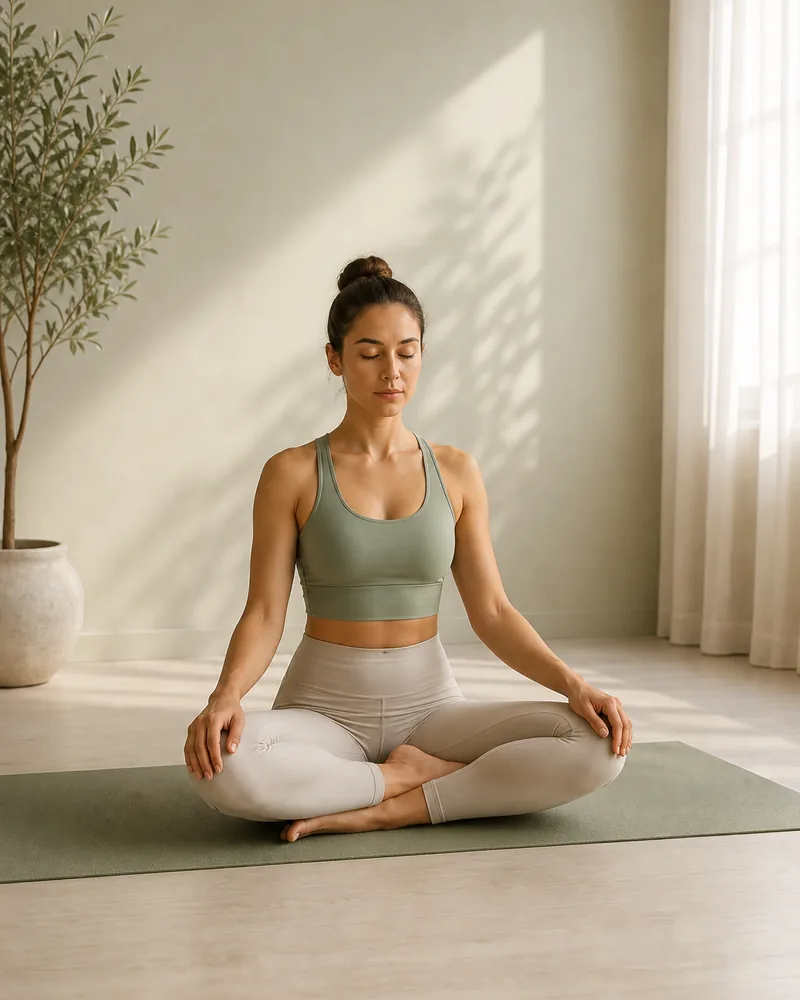
Easy Pose is a seated yoga pose defined by crossed shins, hands on the knees, and an upright seat.
How to do it
- Sit tall on your sit bones.
- Cross your shins and place your hands on your knees.
Why it helps: Easy Pose calms the mind and opens the hips.
Child's Pose (Balasana)
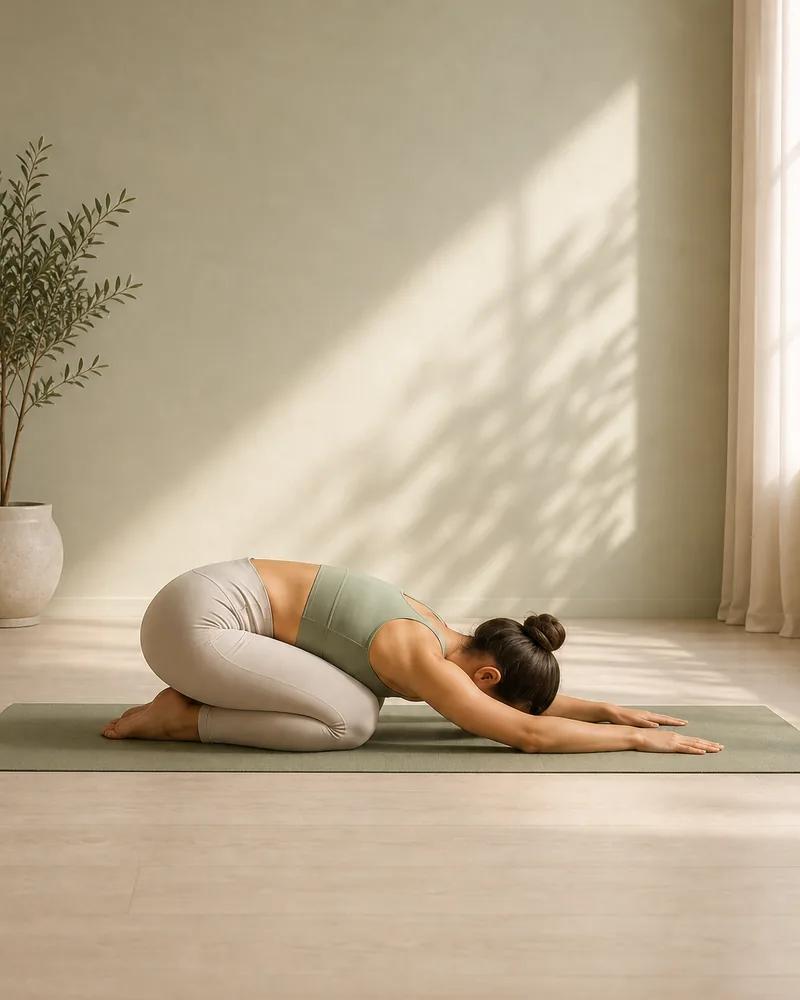
Child's Pose is a beginner forward fold with the hips moving toward the heels and the forehead lowered.
How to do it
- Bring your hips toward your heels with your arms extended.
- Lower your forehead.
Why it helps: Child's Pose rests the spine and hips and is calming.
Puppy Pose (Uttana Shishosana)
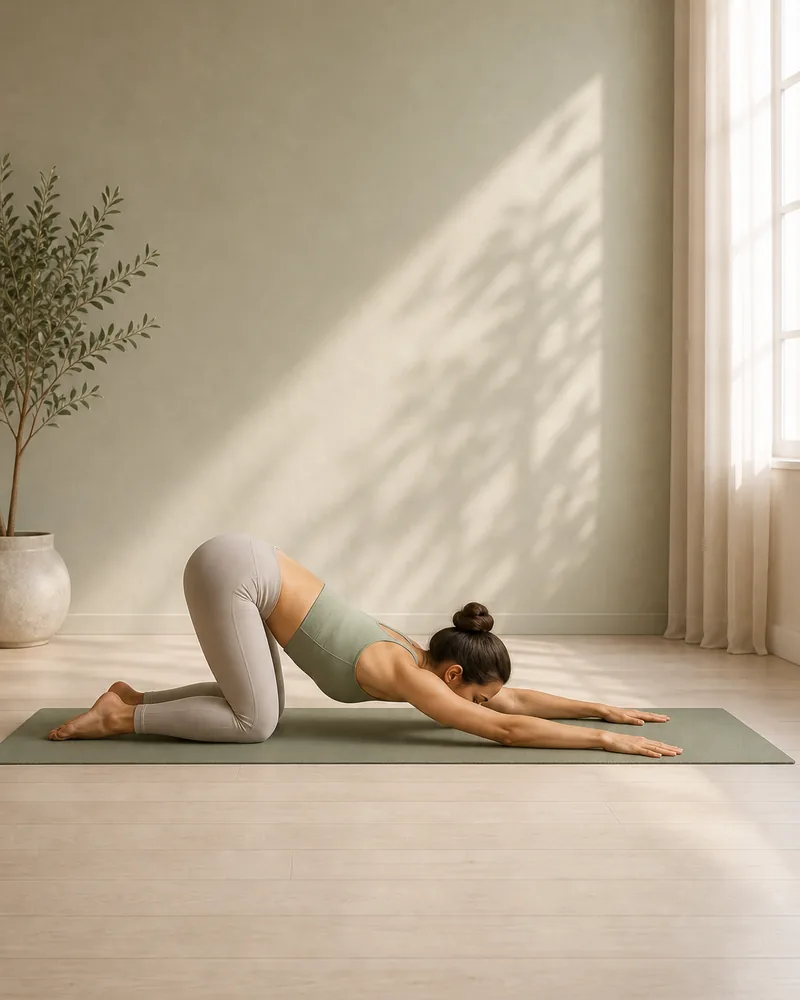
Puppy Pose is a beginner forward fold that keeps the hips over the knees as the chest moves toward the floor.
How to do it
- Position your hips over your knees.
- Let your chest move toward the floor.
Why it helps: Puppy Pose stretches the shoulders and spine.
Downward Dog (Adho Mukha Svanasana)
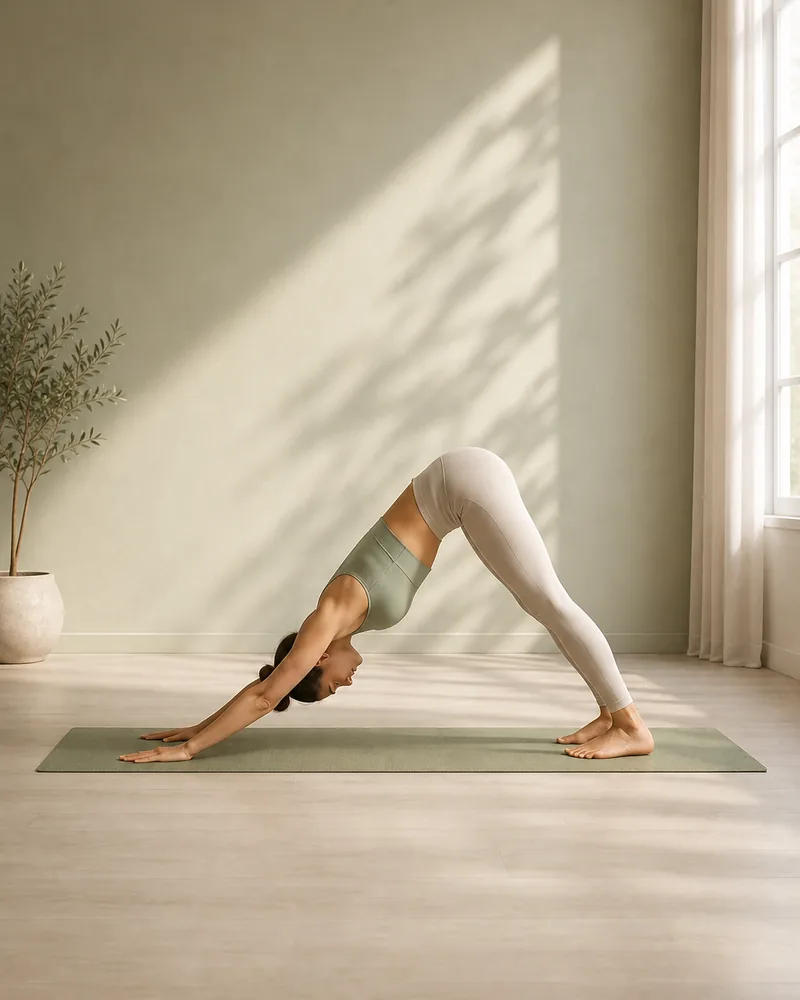
Downward Dog is a beginner inversion with shoulder-width hands and lifted hips.
How to do it
- Place your hands shoulder-width apart.
- Lift your hips high and reach your heels down.
Why it helps: Downward Dog lengthens the spine and strengthens the arms.
Standing Forward Fold (Uttanasana)
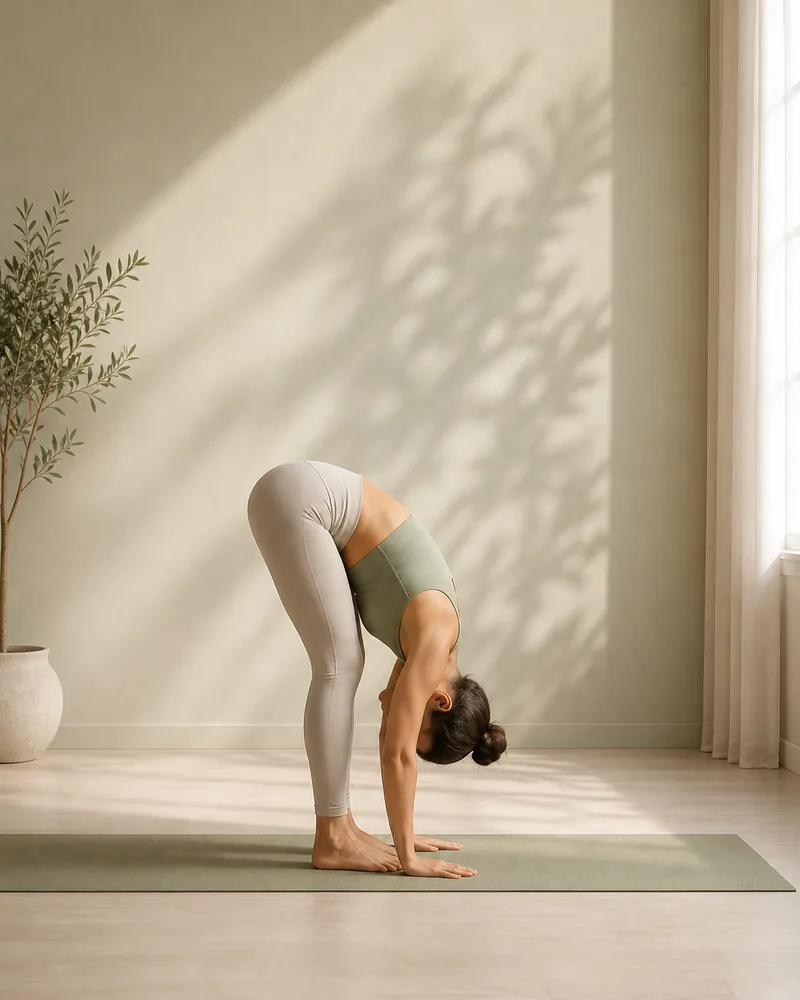
Standing Forward Fold is a beginner forward fold performed with a hip hinge and soft knees.
How to do it
- Hinge from your hips and keep your knees soft.
- Release the crown of your head down.
Why it helps: Standing Forward Fold stretches the hamstrings and calms the mind.
Mountain Pose (Tadasana)
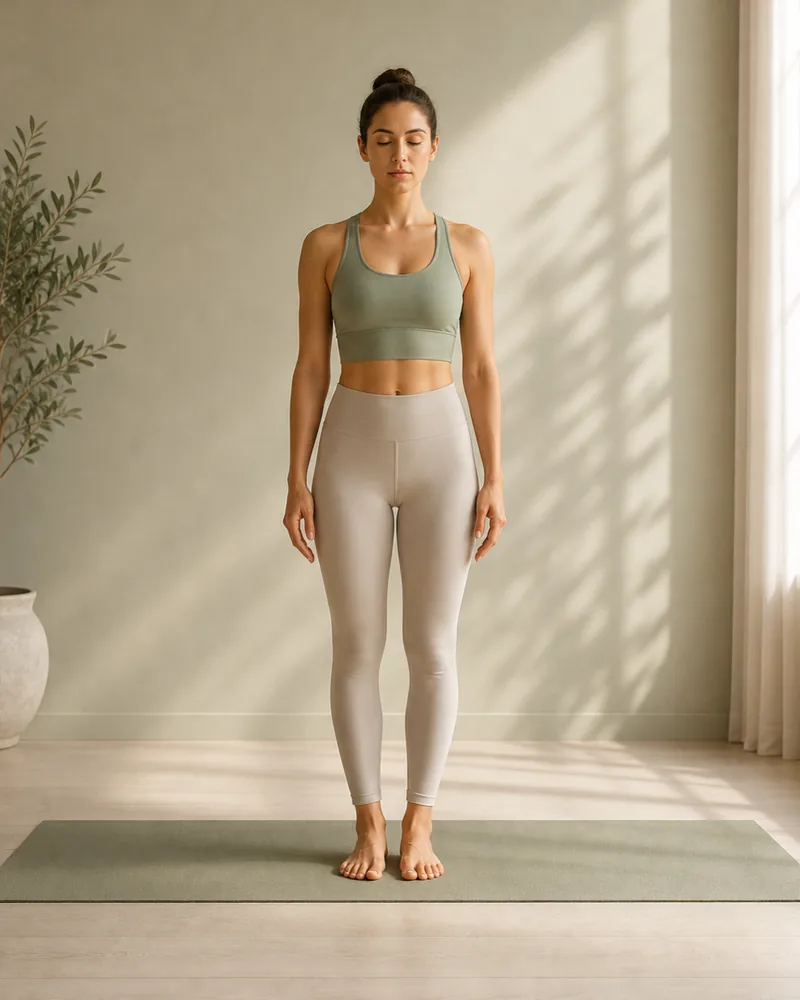
Mountain Pose is a beginner standing pose with hip-width feet, evenly distributed weight, and relaxed shoulders.
How to do it
- Place your feet hip-width apart and distribute your weight evenly.
- Lift through the crown of your head while relaxing your shoulders.
Why it helps: Mountain Pose supports grounding and better posture and calms the mind.
Tree Pose — Right Side (Vrksasana)
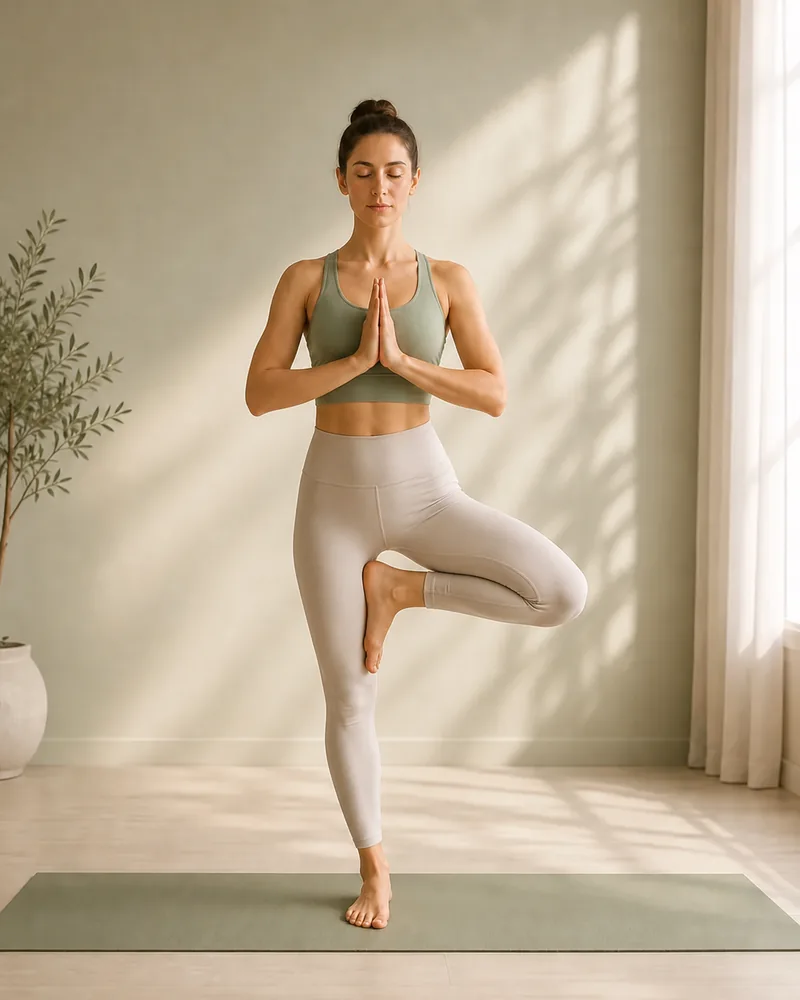
Tree Pose is a beginner balance pose that places one foot on the inner thigh or calf while the gaze stays fixed.
How to do it
- Place your right foot on your inner thigh or calf.
- Keep your hips square and fix your gaze.
Why it helps: Tree Pose improves balance and focus.
Tree Pose — Left Side (Vrksasana)
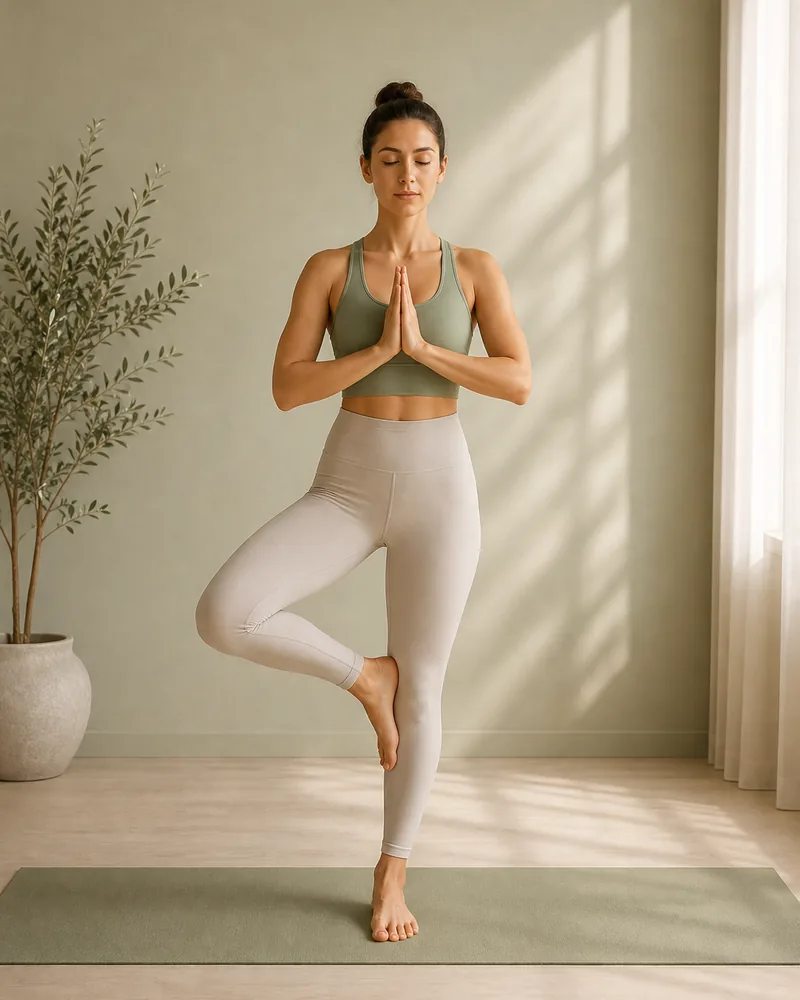
The left-side Tree Pose uses the same beginner balance cues and hold time as the right side.
How to do it
- Place your left foot on your inner thigh or calf.
- Keep your hips square and fix your gaze.
Why it helps: Tree Pose improves balance and focus.
Key takeaways
- Keep the listed holds equal on the right and left sides of Tree Pose.
- Use the supplied alignment and breath cues instead of chasing a deeper shape.
- Move between poses with control and without rushing.
How to Build a Daily Morning Yoga Habit
Build a daily morning yoga habit by keeping your first week predictable. Repeating the same poses makes it easier to notice the order, your breathing, and the time the practice takes.
| Day | Route | Focus |
|---|---|---|
| 1 | Five minutes | Learn the selected pose names and holds |
| 2 | Five minutes | Follow the listed breath cues |
| 3 | About 10 minutes | Complete the full sequence without rushing |
| 4 | Five minutes | Keep the practice small on a busy day |
| 5 | About 10 minutes | Give both Tree Pose sides equal time |
| 6 | About 15 minutes | Repeat the four specified poses |
| 7 | Your choice | Select the duration that feels sustainable |
Set out anything you plan to use the night before. Attach the practice to an existing cue, such as opening the curtains. If you miss a day, return to the five-minute route rather than doubling the next session. You can also use a seven-day beginner yoga challenge for a guided follow-up.
Key takeaways
- Repeat a familiar sequence while you learn its timing and order.
- Use the five-minute version when your schedule changes.
- Resume after a missed day without adding extra work.
What Are the Benefits of Morning Yoga?
The benefits associated with this morning yoga sequence include movement, strength, balance, focus, and calm-related categories in Yoga24's pose data. These categories describe the poses; they do not guarantee a specific result from one session.
Research may support broader claims about regular yoga practice, but general evidence should not be treated as proof that this exact morning routine produces a distinct health outcome.
Think of one session as a chance to move, breathe, and learn the sequence. Read the evidence separately from popular claims in Yoga24's guide to yoga benefits. If your goal involves treating pain, recovering from injury, or managing a health condition, seek advice tailored to you.
Key takeaways
- The pose data links the sequence with several movement and calm-related categories.
- One short session cannot guarantee a health result.
- Treatment and rehabilitation goals require individual professional advice.
Frequently Asked Questions
These answers address practical questions that often arise when you start a morning yoga routine at home.
- Can I practise this routine without a yoga mat?
- You may practise on another stable, nonslip surface, although the supplied pose data does not specify equipment. Check that you have enough clear space and that your hands and feet do not slide. Avoid thick or unstable surfaces that make standing balance uncertain. If the surface changes how secure you feel, shorten your route and leave out any pose you cannot hold steadily.
- Should I do morning yoga before or after breakfast?
- Choose the timing that lets you move comfortably, because one rule will not suit everyone. Avoid turning meal timing into a test of discipline. If you have a medical condition that affects eating, blood sugar, dizziness, or exercise timing, ask your healthcare professional for individual guidance rather than relying on general yoga advice.
- What if I lose balance in Tree Pose?
- End the hold and return to Mountain Pose when you lose balance. Keep your gaze fixed and your hips square. Balance may differ between sides and from one morning to the next.
- Can I replace a pose that feels uncomfortable?
- Yes. You can omit a pose and continue with a shorter route. Ask a qualified teacher for an alternative if the same position repeatedly feels uncomfortable, and seek medical advice for persistent pain.
- How often should I follow the seven-day plan?
- Use the plan once as an introduction, then choose a frequency that fits your schedule and recovery. You do not need to complete the longest route daily. The plan is a habit framework, not a medical or fitness prescription. If regular practice causes lingering discomfort or unusual fatigue, pause and seek advice before continuing.
Key takeaways
- Choose timing and equipment based on comfort and stability.
- Omit a pose rather than forcing or rushing it.
- Seek qualified guidance for persistent discomfort or individual health needs.
Article Summary
This adjustable morning sequence gives you a 5-, 10-, or 15-minute route using eight beginner poses from Yoga24's canonical data.
- The full route includes nine minutes of holds, while transitions determine the total time.
- Both sides of Tree Pose receive equal 60-second holds.
- Move calmly between poses and omit any position that feels uncomfortable.
Make Tomorrow Morning Easier
A good morning yoga routine for beginners is short enough to repeat, clear enough to follow, and adaptable to the time you have. Choose your 5-, 10-, or 15-minute route before bed, then leave this sequence where you can find it in the morning.
Start your morning practice with Yoga24
Ready to make this routine part of your morning? Yoga24 creates practices for your level and available time, then guides you through each pose with spoken cues so you can focus on moving and breathing instead of watching a screen.
Choose a five-, ten-, or fifteen-minute session in Yoga24 and let the app guide your next morning practice.
Practise with Yoga24