Bedtime Yoga · Beginner Routine
10 Minute Bedtime Yoga for Beginners
A 10 minute bedtime yoga for beginners routine should feel quiet, clear, and manageable when your energy is low. You do not need a demanding flow or a long list of poses. This floor-based sequence uses five beginner positions, slow breathing cues, and enough time to settle before you move again.
The timed holds add up to nine minutes. Use the remaining minute to settle into each position without rushing. You will begin seated, move into a forward fold, practise a reclined twist on both sides, and finish lying still. The aim is to create a calmer boundary between your day and bedtime, not to force sleep or achieve a deeper stretch.
Prepare a stable surface, comfortable clothing, and any support a qualified teacher has recommended for you. Keep every movement within a comfortable range.
Your 10 Minute Bedtime Yoga Routine at a Glance
This sequence stays close to the floor and includes no advanced positions. Every pose is classified as beginner in Yoga24's pose data. The listed benefits describe the pose categories in that data; they do not guarantee that one practice will change your sleep.
| # | Pose | Sanskrit | Hold | Level | Key benefit |
|---|---|---|---|---|---|
| 1 | Easy Pose | Sukhasana | 90 seconds | beginner | Calms the mind |
| 2 | Child's Pose | Balasana | 90 seconds | beginner | Calming |
| 3 | Reclined Spinal Twist (right) | Jathara Parivartanasana | 90 seconds | beginner | Releases spine |
| 4 | Reclined Spinal Twist (left) | Jathara Parivartanasana | 90 seconds | beginner | Releases spine |
| 5 | Corpse Pose | Savasana | 3 minutes | beginner | Full relaxation |
Move at a pace that leaves room to reposition without rushing. If nine minutes of holds feels too long tonight, stop earlier instead of hurrying through the sequence.
The order gradually reduces the amount of repositioning required. Once you reach the reclined poses, you remain lying down through the end. That practical choice keeps the final part of the routine quiet as your attention moves toward rest.
Key takeaways
- Five beginner positions create a complete, floor-based sequence.
- The holds total nine minutes, leaving one minute to settle between positions.
- The routine supports a wind-down ritual but does not promise sleep.
How to Prepare for Bedtime Yoga
Choose a stable, nonslip surface with enough space for your arms and legs. Dim lighting may make the room feel less stimulating, but keep enough light to move safely. Put your phone out of reach or enable a quiet mode before you begin.
Wear clothes that let you move and breathe comfortably. A yoga mat can provide grip and cushioning. Do not turn books, unstable cushions, or lightweight furniture into weight-bearing props.
Check how you feel before starting. If you notice pain, dizziness, numbness, or unusual breathing difficulty, do not use this routine as treatment; seek appropriate individual advice.
You can also review Yoga24's guide to starting yoga at home if this is your first independent session.
Key takeaways
- Clear enough floor space before you begin.
- Reduce avoidable distractions while keeping the room safe to navigate.
- Stop when symptoms or discomfort make the practice inappropriate.
10 Minute Bedtime Yoga for Beginners: Step by Step
Set a quiet timer if you need one, or use spoken guidance that does not require watching a screen. Keep your breath unforced throughout the practice. A shorter comfortable hold is more useful than staying because the timer has not finished.
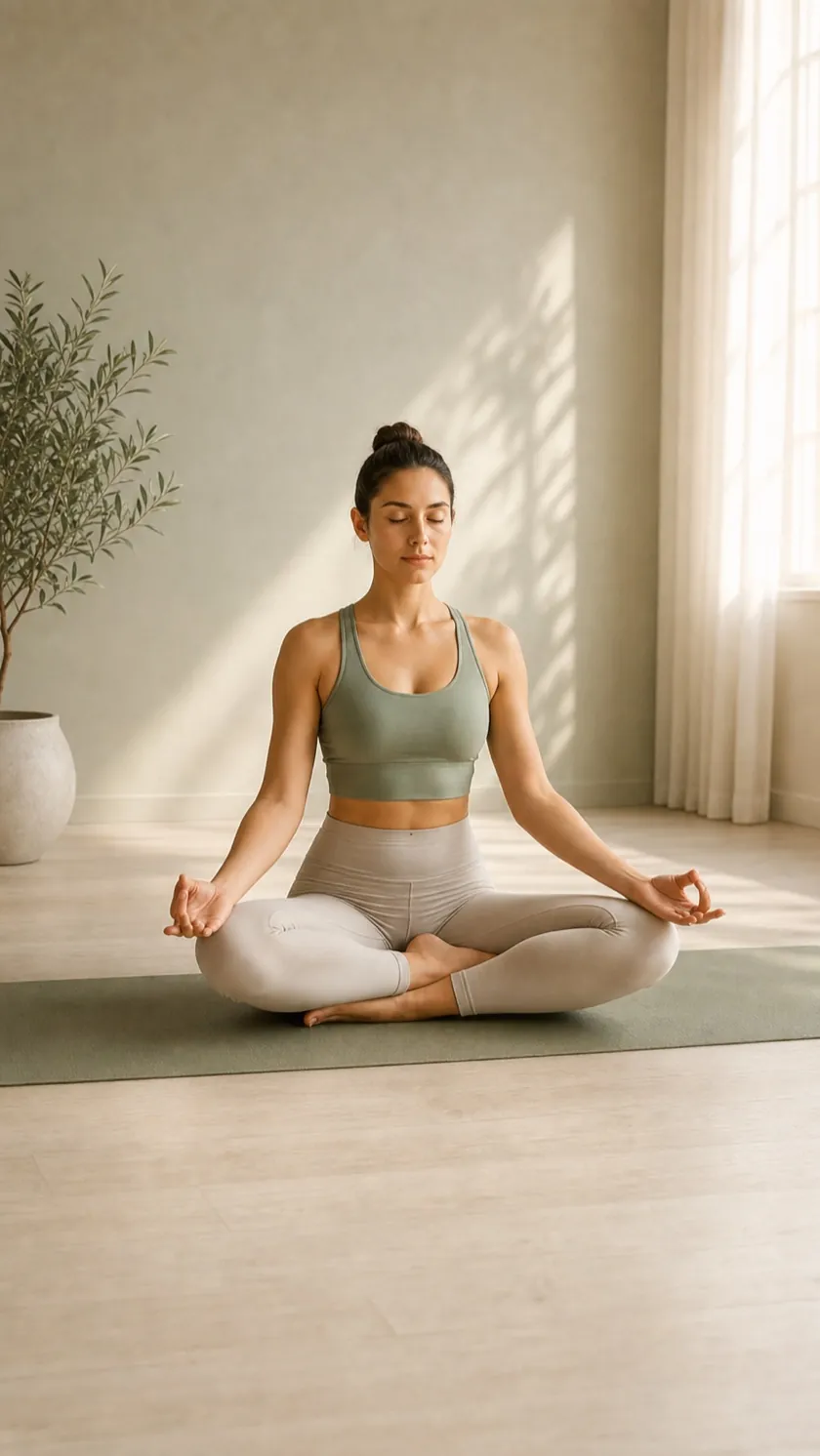
Easy Pose (Sukhasana)
How to do it
- Sit tall on sit bones.
- Shins crossed, hands on knees.
Hold
Hold for 90 seconds.
Key alignment cue
Sit tall on sit bones.
Breath cue
Slow diaphragmatic breath.
Why it helps
Yoga24's pose data associates Easy Pose with calming the mind and opening the hips.
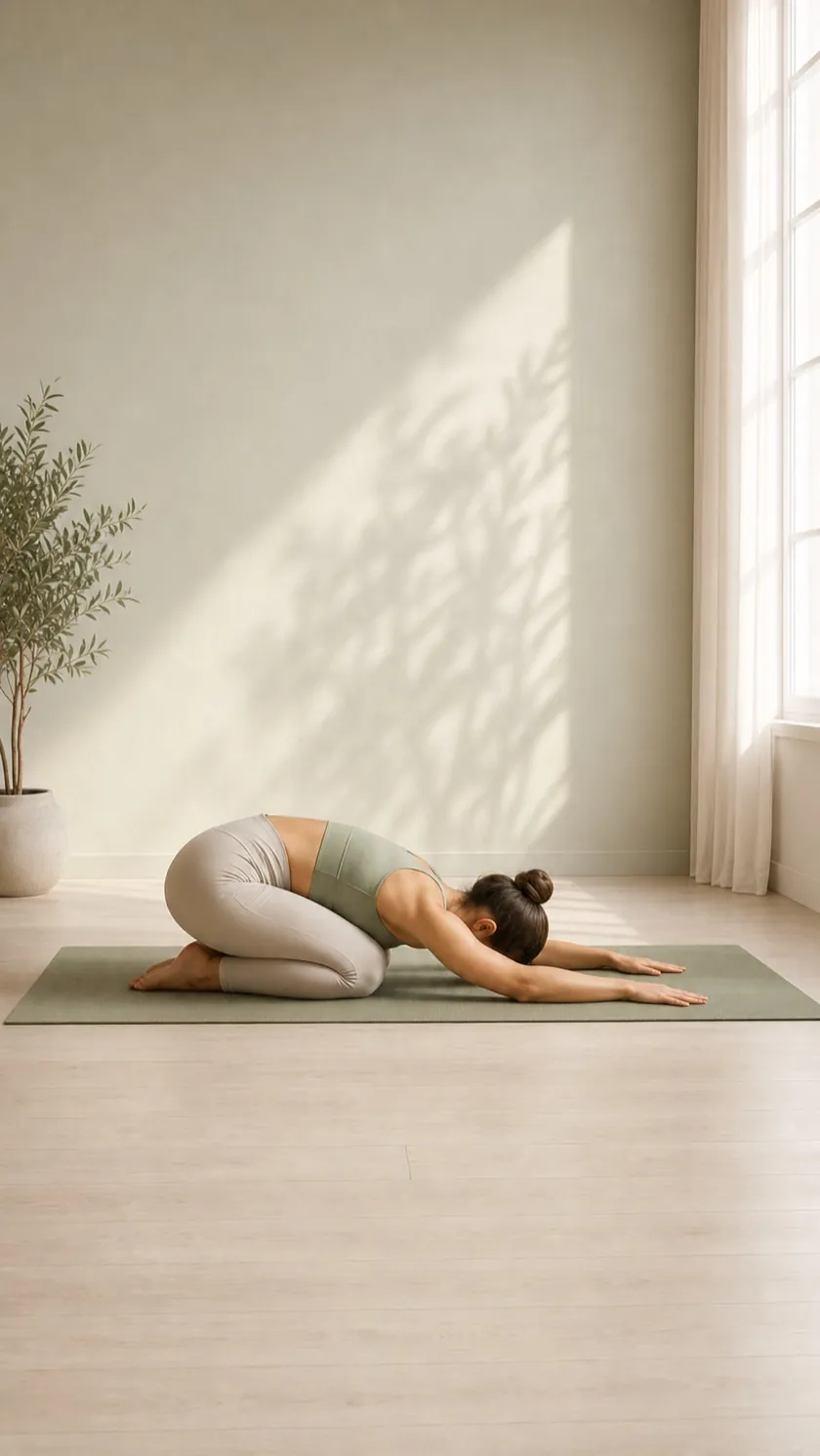
Child's Pose (Balasana)
How to do it
- Hips to heels, arms extended.
- Forehead down.
Hold
Hold for 90 seconds.
Key alignment cue
Hips to heels, arms extended.
Breath cue
Slow, deep breath.
Why it helps
Yoga24's pose data associates Child's Pose with resting the spine and hips and with calming.
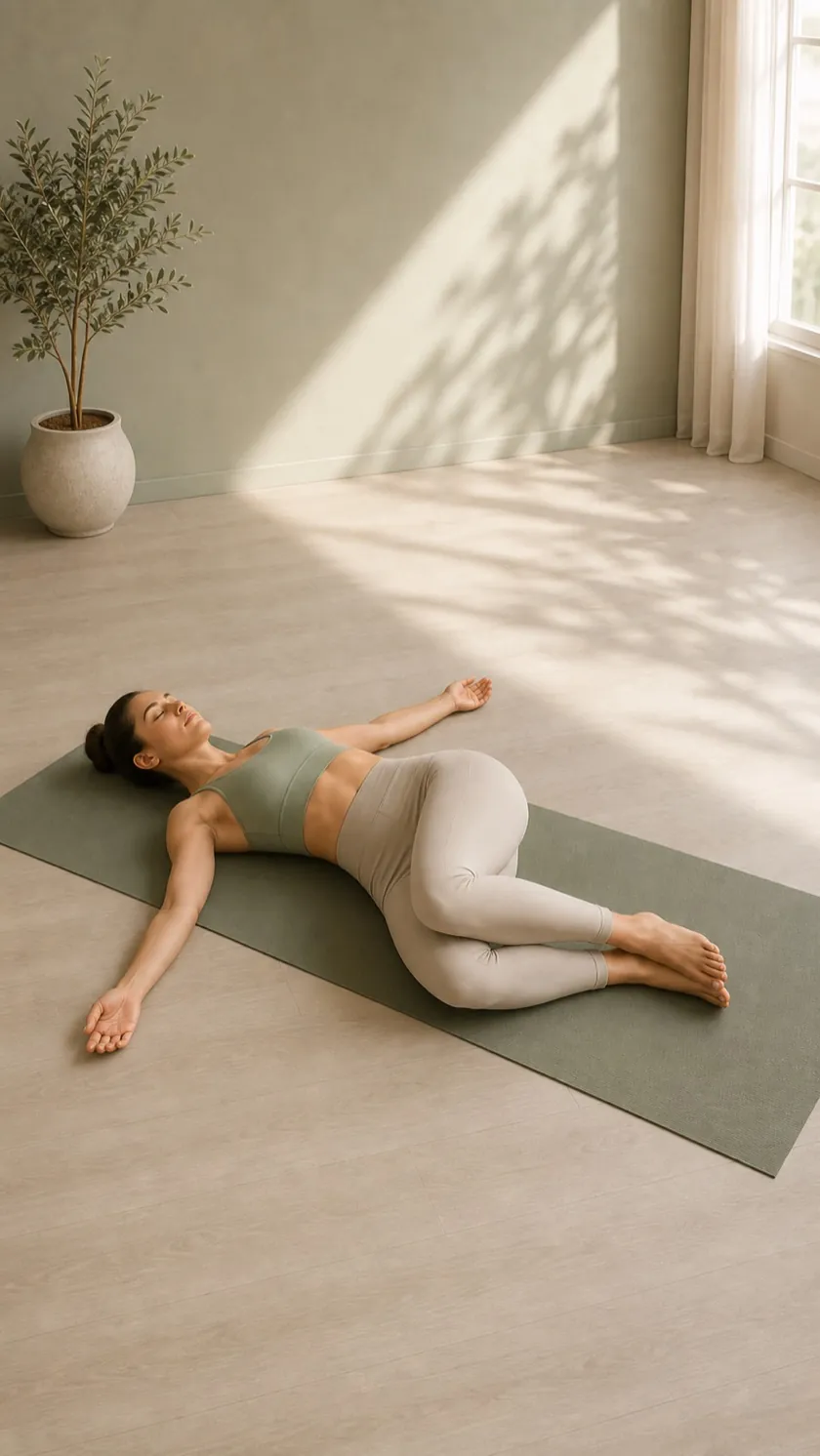
Reclined Spinal Twist — Right Side (Jathara Parivartanasana)
How to do it
- Knees drop gently.
- Shoulders stay grounded.
Hold
Hold for 90 seconds on the right.
Key alignment cue
Shoulders stay grounded.
Breath cue
Slow exhale to release.
Why it helps
Yoga24's pose data associates this beginner restorative pose with releasing the spine and calming.
Reclined Spinal Twist — Left Side (Jathara Parivartanasana)
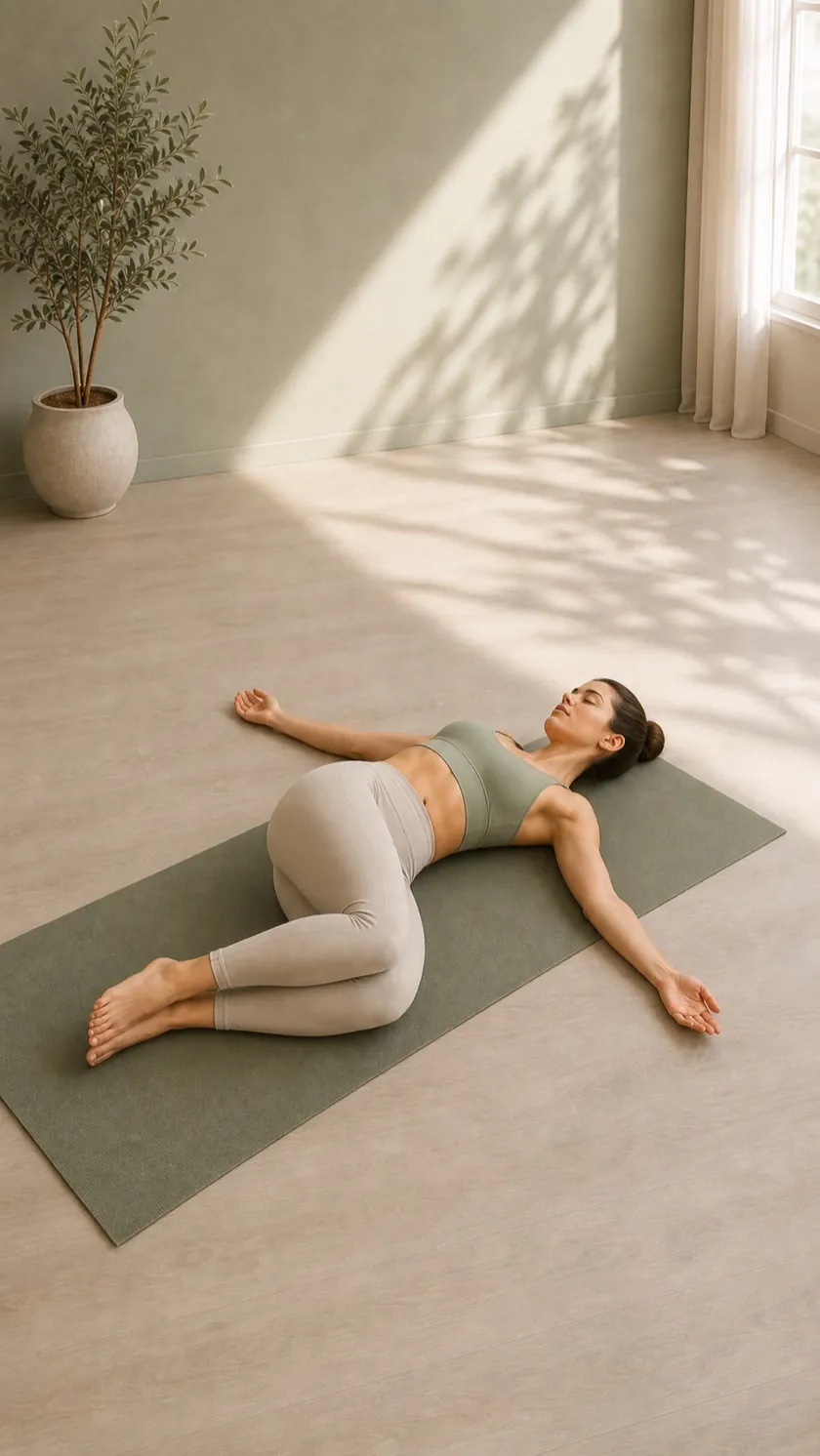
How to do it
- Knees drop gently.
- Shoulders stay grounded.
Hold
Hold for 90 seconds on the left.
Key alignment cue
Shoulders stay grounded.
Breath cue
Slow exhale to release.
Why it helps
The left-side pose has the same restorative category, alignment cues, breath cue, and benefits as the right side. Giving each side equal time follows Yoga24's bilateral-pose standard.
Corpse Pose (Savasana)
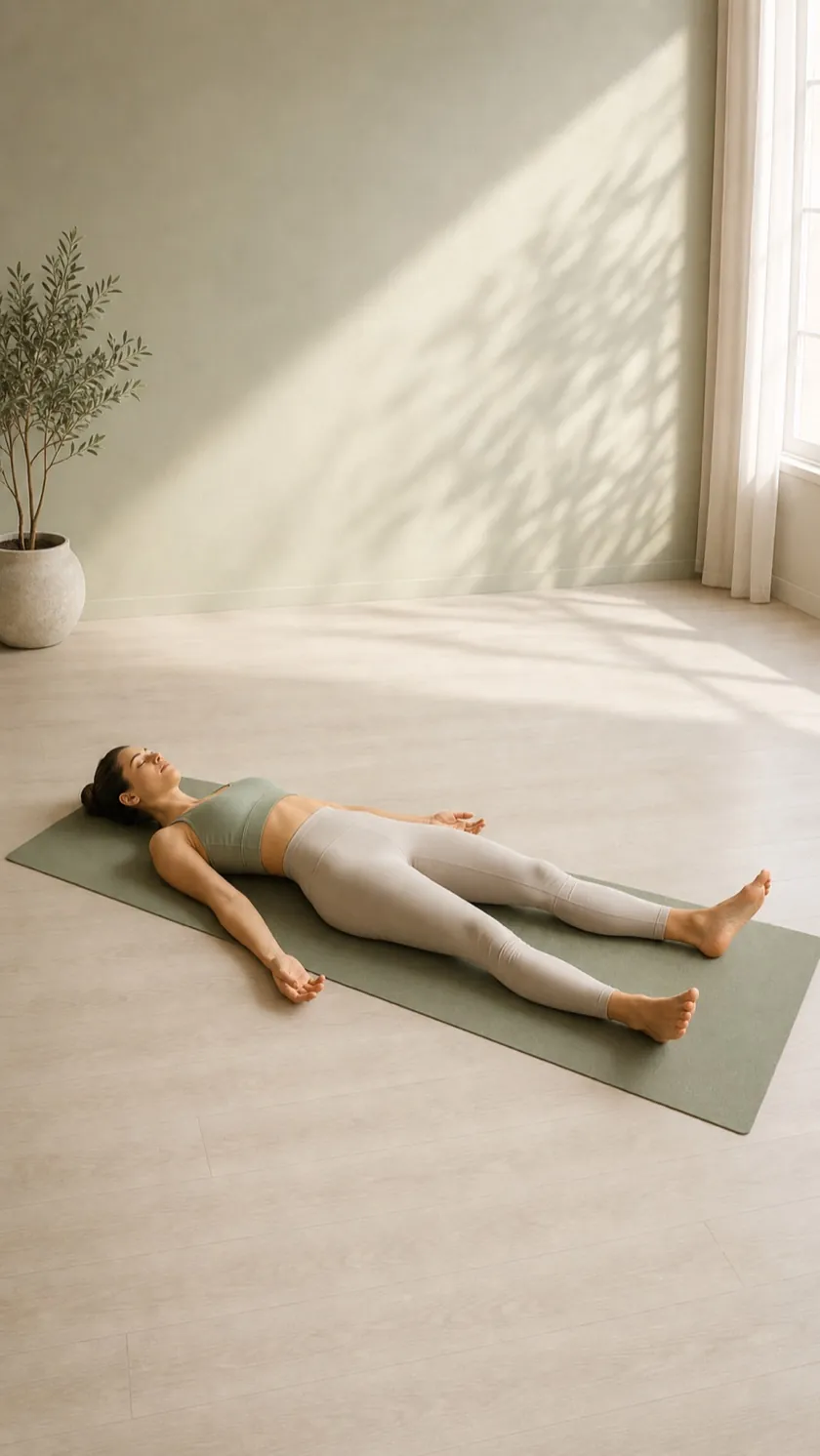
How to do it
- Body heavy and still.
- Palms open.
Hold
Hold for 3 minutes.
Key alignment cue
Body heavy and still.
Breath cue
Natural, unforced breath.
Why it helps
Yoga24's pose data associates Corpse Pose with full relaxation and integration.
Key takeaways
- Follow the stored alignment and breath cues without chasing a deeper shape.
- Practise both sides of the twist for the same 90-second hold.
- Finish with three minutes of natural, unforced breathing in Corpse Pose.
How to Make the Routine Easier to Repeat
Attach the practice to something that already happens each evening. You might begin after brushing your teeth or when you put your phone on charge. A clear cue removes the need to decide again when you are tired.
Keep the setup small. Store your mat where you can reach it, save the sequence, and choose your start time earlier in the day. Avoid measuring success by how quickly you fall asleep. The useful habit is creating a consistent boundary after daytime activity.
If you miss a night, return at the next planned time. Do not double the routine. You may also alternate this practice with a short calming yoga routine or learn how to build a beginner yoga schedule.
Key takeaways
- Link the routine to an existing evening cue.
- Prepare your space and instructions before bedtime.
- Measure consistency by returning, not by forcing a sleep result.
Frequently Asked Questions
Can you do bedtime yoga in bed?
You can practise only when the surface gives you enough stability for the specific position. A soft mattress changes how your body is supported and may make some movements less secure. The supplied Yoga24 pose data does not provide bed-based modifications, so use a stable surface or follow guidance from a qualified teacher who can assess the setup.
How close to sleep should you do bedtime yoga?
Choose a time that creates a calm boundary near the end of your evening without making you rush. The supplied pose data does not prescribe a clock time before sleep. Try one consistent window and notice whether it fits your routine. If practising leaves you more alert, move the session earlier or choose a quieter activity instead.
Should you do bedtime yoga every night?
You do not need to practise every night for the routine to be worthwhile. Start with a frequency that fits your schedule and allows you to notice how your body responds. Two or three planned evenings can be easier to maintain than an immediate daily target. Seek individual guidance if health needs affect the appropriate frequency.
What if a pose feels uncomfortable?
Leave the pose and stop the sequence if discomfort increases or feels concerning. A recorded routine cannot assess your movement or symptoms. The pose data supplied for this article does not include modifications, so do not improvise one from unstable household objects. Ask a qualified teacher for an appropriate alternative, and seek medical advice for persistent pain.
Can bedtime yoga help you sleep better?
Yoga may support relaxation, and research has examined associations between yoga and sleep outcomes. It cannot guarantee that you will fall asleep faster or sleep better after this routine. Sleep difficulties can have many causes, so avoid treating the sequence as medical care. Persistent sleep problems deserve advice from an appropriate healthcare professional.
Key takeaways
- Use a stable surface rather than assuming every pose works safely in bed.
- Adjust the timing and frequency around your response and routine.
- Treat ongoing sleep or pain concerns as health questions, not yoga challenges.
Article Summary
This 10-minute routine uses five beginner positions and a clear floor-based timeline to help you shift from daytime activity toward rest.
- Nine minutes of holds leave one minute to settle between positions.
- Both sides of Reclined Spinal Twist receive equal time.
- Bedtime yoga may support relaxation but cannot guarantee sleep.
End Your Day With One Small Practice
A 10 minute bedtime yoga for beginners routine works best when it stays predictable. Clear your space, follow the same order, and let the final three minutes remain quiet. You are building an evening cue, not taking a test.
Save this sequence in Yoga24 and use spoken guidance for your next bedtime practice.
Let Yoga24 guide your next bedtime practice
Choose your level and available time, then follow spoken cues through a complete routine without watching the screen.
Download Yoga24 on the App Store